New Findings on Synergistic Microplastic-Heavy Metal Pollution in Subtropical Mangrove Ecosystems
Mangroves are critical ecosystems in tropical and subtropical intertidal zones, providing important ecological functions including shoreline stabilization, carbon sequestration, and pollutant retention. However, rapid industrialization and urbanization have brought continuous combined pollution pressure to mangrove ecosystems. Microplastics and heavy metals, as two typical persistent pollutants in coastal environments, often coexist in mangrove sediments, yet their vertical synergistic distribution characteristics, interaction mechanisms, and driving factors have not been thoroughly elucidated.
This study collected sediment cores from 0–100 cm depth in the Zhangjiangkou Mangrove National Nature Reserve in Fujian Province, employing multiple detection analyses and ecological risk assessment models for comprehensive investigation. Results showed that microplastic abundance in the mangrove sediments ranged from 72.8 to 333 items/kg, predominantly composed of polyethylene and fibrous morphologies. Concentrations of arsenic, cadmium, and lead exceeded local background values in Fujian, with both pollutants accumulating most significantly in Avicennia marina and Aegiceras corniculatum community zones. Ecological risk assessment indicated that microplastic pollution was at a low-risk level, whereas cadmium posed moderate ecological risk, and the Avicennia marina zone reached moderate comprehensive pollution levels. Scanning electron microscopy-energy dispersive spectroscopy analysis directly confirmed that cadmium, lead, and chromium could adsorb onto microplastic surfaces.
The study identified total organic carbon, salinity, and fibrous microplastics as key factors mediating the synergistic pollution of both contaminants. Microplastic abundance showed significant positive correlations with chromium and nickel concentrations, suggesting that microplastics, as heavy metal carriers, could enhance their environmental mobility and bioavailability. ²¹⁰Pb dating analysis revealed a three-stage accumulation pattern in sediments: slow accumulation before the 1980s, rapid growth following China's industrialization process after the 1980s, and a slight decline in heavy metal accumulation after 2010 while microplastics continued to increase—highly consistent with China's socioeconomic transformation and the implementation of environmental control policies.
The study also found significant differences in pollution interception capacity among different mangrove species. Avicennia marina and Aegiceras corniculatum with complex root systems demonstrated stronger retention capacity than Kandelia obovata with plate-like roots, while bare tidal flats without vegetation showed markedly lower pollutant accumulation.
The result was published in the international academic journal Gondwana Research (CAS Q1 TOP journal) under the title "Temporal dynamics and synergistic pollution of microplastics and heavy metal(loid)s in subtropical mangrove sediments". This research was supported by the Guangdong Provincial Science and Technology Plan, ANSO Collaborative Research, National Natural Science Foundation of China, and other projects. Article link: https://doi.org/10.1016/j.gr.2026.01.017
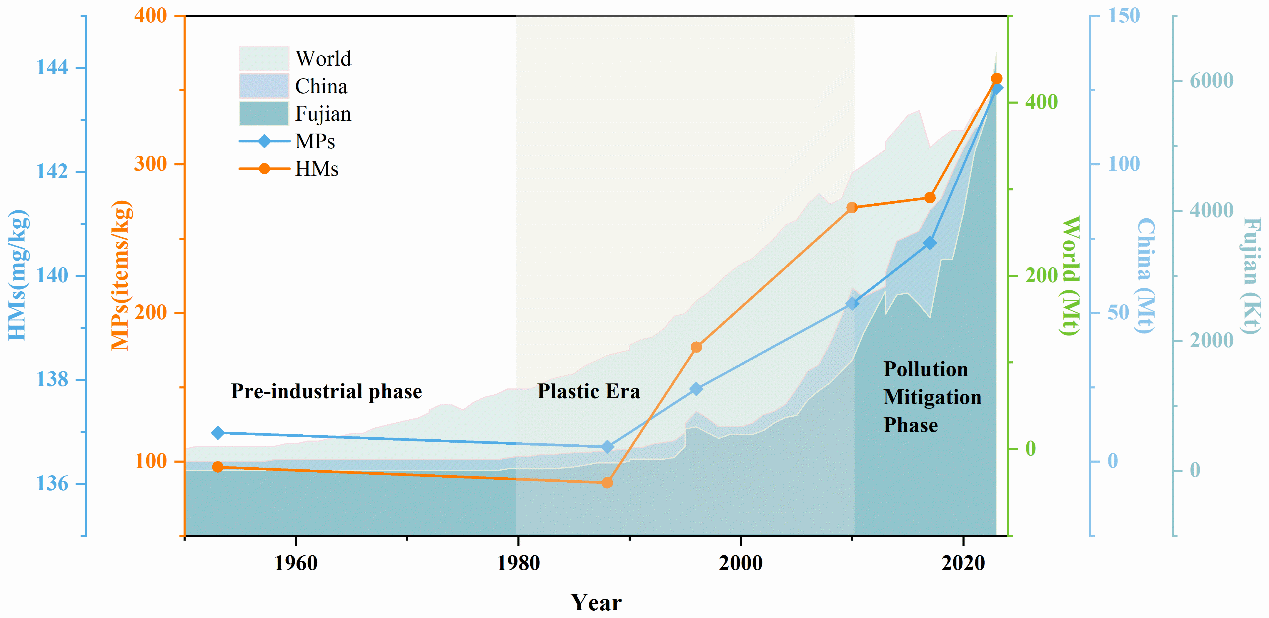
Figure. Historical Trends of Microplastic-Heavy Metal Synergistic Pollution.(Image by ZHUANG et al.)
File Download: