Sciences reveals the important role of intraspecific trait variation in forest response to nitrogen deposition
The continuous increase in atmospheric nitrogen deposition caused by global fossil fuel combustion and fertilizer use has profoundly affected the structure and function of forest ecosystems. Previous studies have mostly focused on trait changes at the species level, and there is still a lack of in-depth understanding of how functional traits at the community level respond to long-term nitrogen deposition, as well as the respective roles played by intraspecific and interspecific variations.
The Restoration Ecology Team at the South China Botanical Garden of the Chinese Academy of Sciences conducted an eight-year field nitrogen addition experiment, systematically assessing the response of understory plant growth and defensive traits to nitrogen deposition at the community level. The results showed that after eight years of nitrogen addition treatment, the functional traits of the high understory community (mainly composed of small trees and large shrubs) remained stable overall and were not significantly affected. In contrast, the low understory community (mainly composed of shrubs and herbaceous plants) exhibited certain responses. Among them, growth traits such as leaf phosphorus concentration and mineral concentration, as well as defensive traits such as leaf lignin concentration, changed, indicating that the impact of long-term nitrogen deposition on the understory community is mainly reflected in key functional traits in the low understory.
Further analysis revealed that the important mechanism driving the aforementioned changes is intraspecific trait variation. Especially in the lower layer of forests, the contribution rate of intraspecific trait variation to changes in key functional traits such as leaf mineral concentration and lignin concentration exceeds 50%, significantly higher than that of species turnover. This indicates that in the face of environmental changes brought about by long-term nitrogen deposition, understory plants respond to environmental changes more through trait differences and adjustments among different individuals within the same species, rather than solely relying on changes in species composition within the community.
The study also found that the biomass production of understory plant communities is significantly correlated with a few key functional traits. Among them, larger specific leaf area and higher leaf phosphorus concentration (growth traits) are beneficial for enhancing understory productivity, while higher leaf lignin concentration (defensive trait) is associated with lower biomass. More notably, these relationships are primarily driven by intraspecific trait variation, indicating that intraspecific trait changes not only participate in the community's response to nitrogen deposition but also play a significant role in regulating forest understory productivity.
This study indicates that under the long-term background of nitrogen deposition, the overall function of the understory community in evergreen broadleaf forests exhibits strong stability. However, intraspecific trait variation can reveal the important ecological regulatory processes behind the changes in community average traits. This study emphasizes the importance of intraspecific trait variation in understanding the response of forest ecosystems to global change, providing a new scientific perspective for long-term monitoring and conservation management of forest ecosystems.
The relevant research findings were published in "Forest Ecology and Management" under the title "The role of intraspecific trait variation in understory responses to simulated nitrogen deposition". JI Lingbo, a graduate student from the restoration ecology team, served as the first author of the paper, with contributions from Prof. LIU Nan and JIAN Shuguang. Prof. REN Hai and Dr. WEI Liping served as corresponding authors. This research was funded by Science and Technology Program of Guangzhou and the National Natural Science Foundation of China. Article link:DOI:10.1016/j.foreco.2026.124039
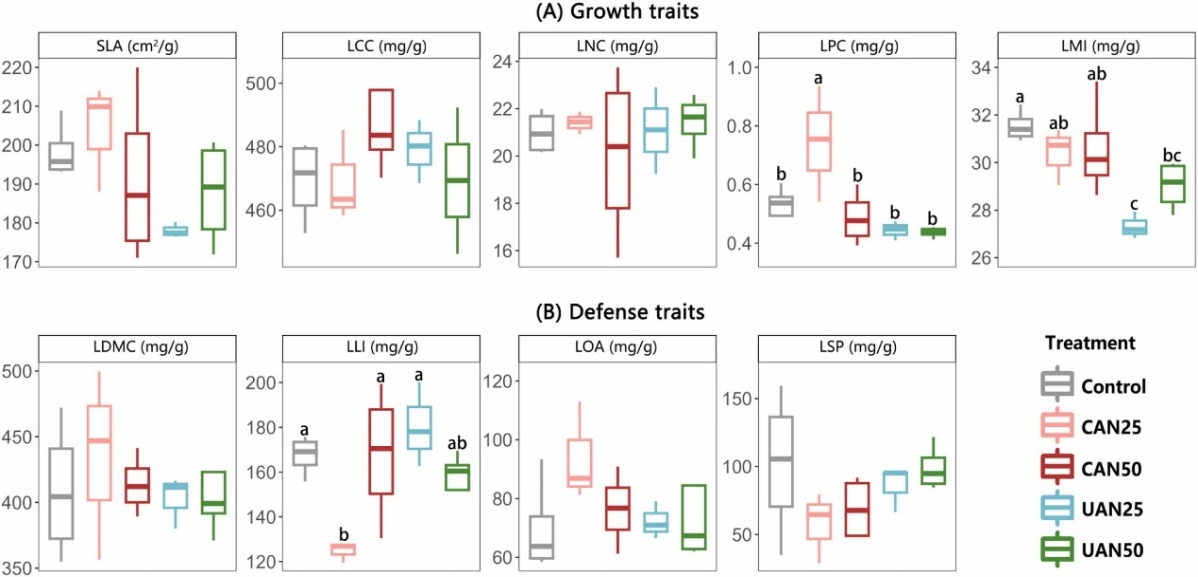
Fig 1. Effects of N addition on overall community trait values of low understory community.(Image by LIU Nan)
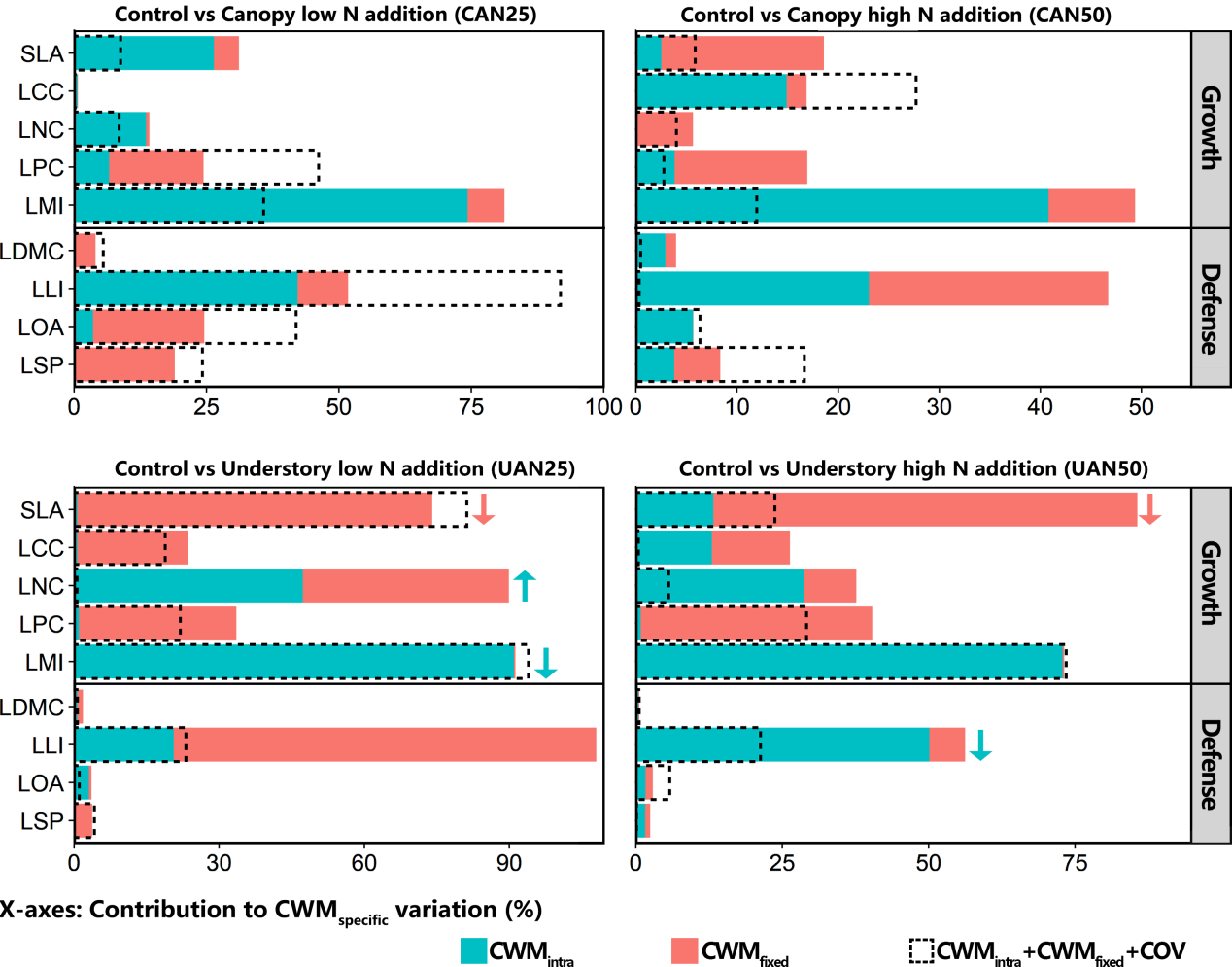
Fig 2. Relative contributions of intraspecific trait variation, interspecific trait variation, and their covariation in the functional trait changes of understory communities.(Image by LIU Nan)
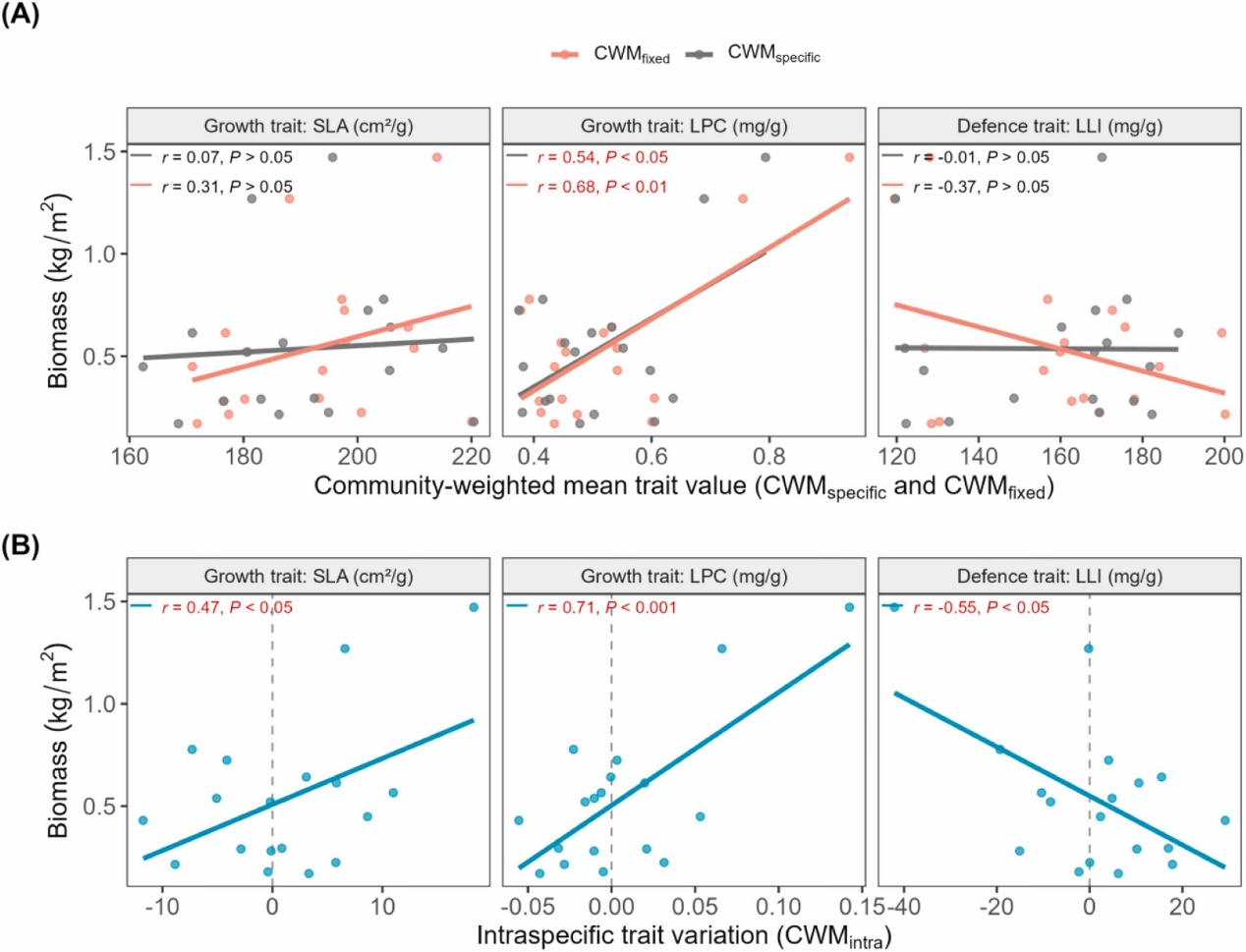
Fig 3. Correlation between biomass of understory communities and weighted average trait values of communities, as well as their intra-specific and inter-specific variation components.(Image by LIU Nan)
File Download: