Population History, Not Age, Determines the Genomic Importance of Ancient Trees
Ancient trees—those that are remarkably old for their species—are declining worldwide, raising concerns about the loss of the ecological and evolutionary history they represent. Their exceptional longevity has long encouraged the idea that they act as genetic reservoirs, preserving variation that may have been lost from younger populations. But does great age itself make an ancient tree genetically unique?
A new genomic study of the critically endangered Chinese swamp cypress (Glyptostrobus pensilis) suggests that an ancient tree’s genetic significance depends less on its age than on its population history.
In a study published in Nature Plants on August 11, researchers from the South China Botanical Garden (SCBG) of the Chinese Academy of Sciences (CAS) and Uppsala University found that ancient trees are far from genetically uniform. Some preserve rare genetic variation that is poorly represented elsewhere, while others largely harbor genetic variation already found in surviving wild or cultivated populations.
Chinese swamp cypress is the only living species of the genus Glyptostrobus, a relict wetland conifer once widespread across the Northern Hemisphere. Today, the species survives mainly in southern China, with scattered occurrences in Vietnam and Laos. Roughly 100 geographically scattered ancient trees remain, alongside about 10 extremely small wild populations and cultivated stands established largely within the past five decades. The study defined ancient trees as those more than 100 years old.
This unusual mix of ancient, wild, and cultivated trees provides a rare opportunity to disentangle the effects of tree age from those of population history.
In this study, the researchers surveyed 59 locations across southern China and Vietnam and conducted whole-genome sequencing of 147 trees, including 64 ancient, 33 wild, and 50 cultivated individuals. Genomic analyses showed that the ancient trees did not share a common origin. Thirty-eight were closely related to nearby wild populations, suggesting historical local introductions, sometimes from limited sources, while the remaining 26 were more consistent with natural relics left behind as former populations declined.
“These ancient trees may look similarly old, but their genomes tell very different historical stories,” said ZHANG Weiping from SCBG, first author of the study. “Some are likely remnants of former natural populations, while others reflect a long history of human introduction and cultivation.”
Population genomic analyses further identified three genetic groups: two highly differentiated genetic lineages, the Zhujiang and Minjiang lineages, and a small group with mixed ancestry that retained relatively high levels of ancestral genetic variation. The researchers found that genetic diversity, inbreeding, and the burden of deleterious mutations varied much more according to genetic lineage than according to whether the trees were ancient, wild, or cultivated. Furthermore, ancient trees as a whole did not consistently show greater genetic diversity or more favorable genomic characteristics than younger trees.
The strongest contrast emerged in rare genetic variation. Natural relic ancient trees retained substantially more genetic variation that was poorly represented in present-day wild and cultivated populations than did historically introduced ancient trees. Simulations further showed that losing natural relic trees, or ancient trees from certain genetic lineages, could reduce the species’ overall nucleotide diversity by as much as 15.1%.
“Longevity alone does not make an ancient tree genetically irreplaceable,” said KANG Ming from SCBG, corresponding author of the study. “What matters is the evolutionary history carried by that individual and whether the same genetic legacy still survives elsewhere.”
The issue is particularly urgent for Chinese swamp cypress. Of the 64 ancient trees surveyed, 39 (60.9%) were classified as being in poor condition or dying. As these trees decline, genetic legacies preserved in only a few individuals could disappear with them.
“Ancient trees deserve protection for many reasons beyond genetics,” said LASCOUX Martin from Uppsala University, another corresponding author of the study. “But genomics can add another layer of information, helping conservationists preserve not only old trees themselves, but also the evolutionary history they carry.”
For rare and endangered species, such genomic information can complement existing protection measures based on age, ecological importance, cultural value, and historical significance. It can also help identify individuals that represent distinctive evolutionary lineages or preserve genetic variation that is poorly represented elsewhere, according to KANG. Article link: https://www.nature.com/articles/s41477-026-02367-9
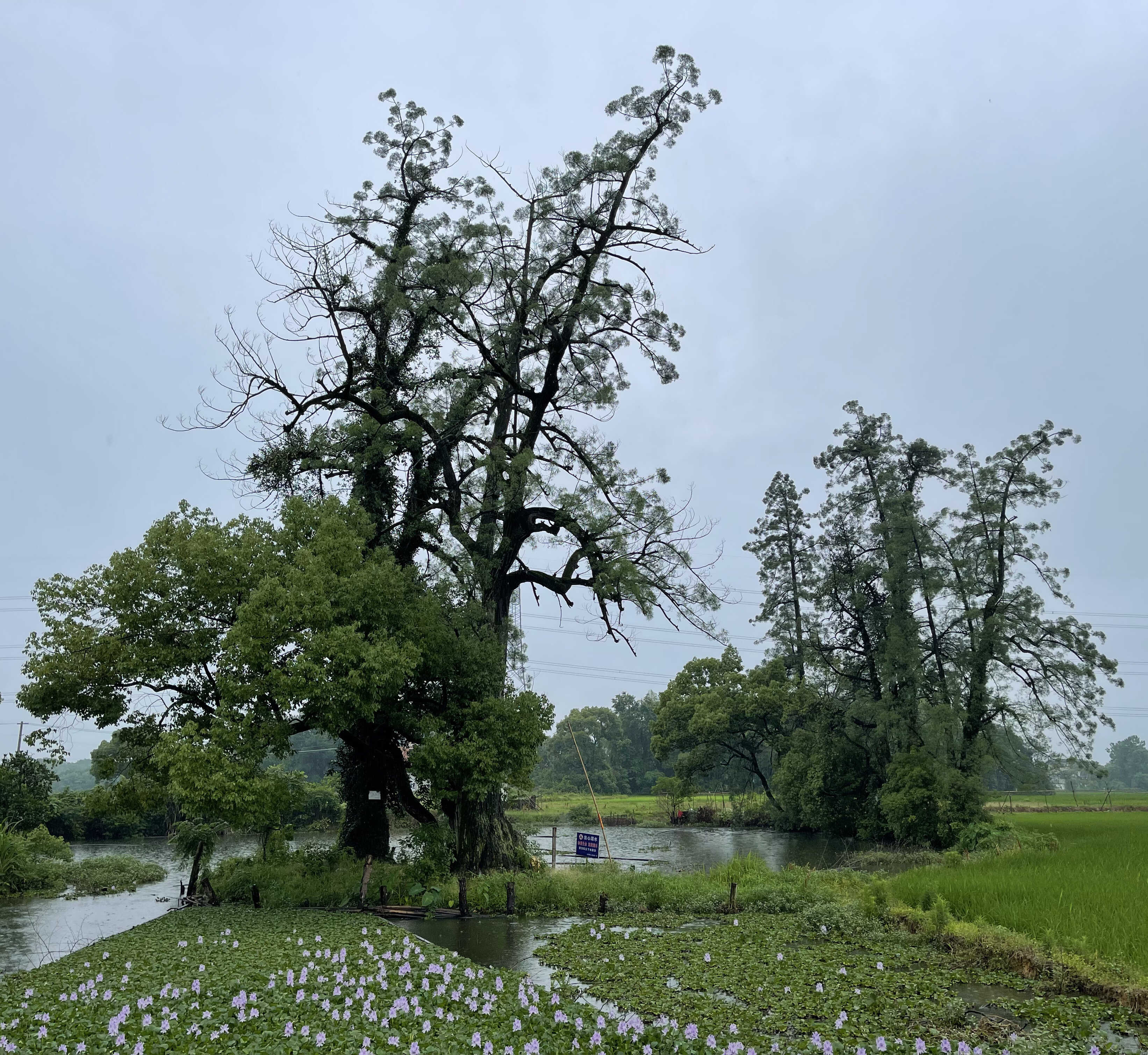
Glyptostrobus pensilis(Image by ZHANG Weiping)
File Download: