Cinnamomum fasciculatum (Lauraceae), a new species from Guangdong, China
The genus Cinnamomum Schaeff. (Lauraceae) comprises approximately 250 species widely distributed from tropical and subtropical Asia to the western Pacific. Traditionally, Cinnamomum s.l. is divided into sect. Camphora Meisn. (ca. 20 species) and sect. Cinnamomum (ca. 230 species). Sect. Camphora is distinguished by its alternate, pinnately veined or trinerved leaves, domatia usually present in the axils of lateral veins, and perulate buds.
In September 2024, Dr. DENG Shuangwen from the Plant Science Research Center, South China Botanical Garden, discovered a suspected new species of Cinnamomum sect. Camphora in the Guangdong Jiangmen Gudoushan Provincial Nature Reserve. Detailed morphological comparisons combined with molecular phylogenetic evidence confirmed that the material represents a new species, which was named Cinnamomum fasciculatum S.W.Deng. & R.J.Wang.
Morphologically, it is most similar to Cinnamomum parthenoxylon (Jack) Meisn. in having sericeous terminal buds, glabrous branchlets, glabrous leaves, and fruits of similar shape and size. However, C. fasciculatum can be readily distinguished by its obovate to obelliptic leaves with an obtuse apex (vs. elliptic-ovate leaves with an acute or shortly acuminate apex in C. parthenoxylon), and most notably by its subterminal inflorescences arranged in the axils of cataphylls below the terminal vegetative bud, sometimes also on axillary brachyblasts (vs. axillary or lateral inflorescences in C. parthenoxylon). In terms of phenology, C. fasciculatum flowers from June to July, distinctly later than the March–May flowering season of C. parthenoxylon. The most distinctive feature of C. fasciculatum is its subterminal inflorescence position: the thyrsoid inflorescences are subtended by caducous bracts rather than leaves, resembling a miniature version of the flowering branches in some sect. Camphora species. This inflorescence structure is reported for the first time in sect. Camphora.
Currently, C. fasciculatum is known only from two populations in the Xinhui District and Taishan City of Jiangmen, Guangdong, both located within the Guangdong Jiangmen Gudoushan Provincial Nature Reserve.
The research was recently published online in PhytoKeys, under the title “Cinnamomum fasciculatum (Lauraceae), a new species from Guangdong, China.” Dr. DENG Shuangwen is the first author, and Professor WANG Ruijiang is the corresponding author. This study was supported by the Guangdong Flagship Project of Basic and Applied Basic Research, the Science & Technology Fundamental Resources Investigation Program, and the National Wild Plant Germplasm Resource Center. Article link: https://doi.org/10.3897/phytokeys.278.199869
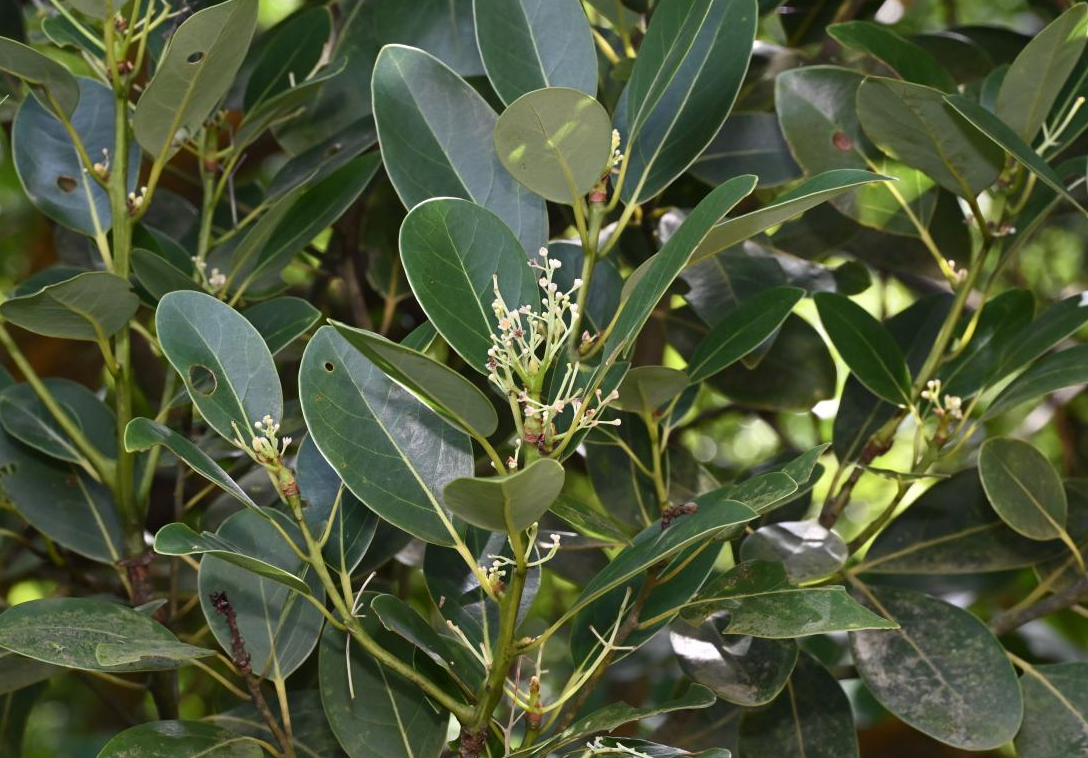
Flowering branch of Cinnamomum fasciculatum(Image by DENG Shuangwen)
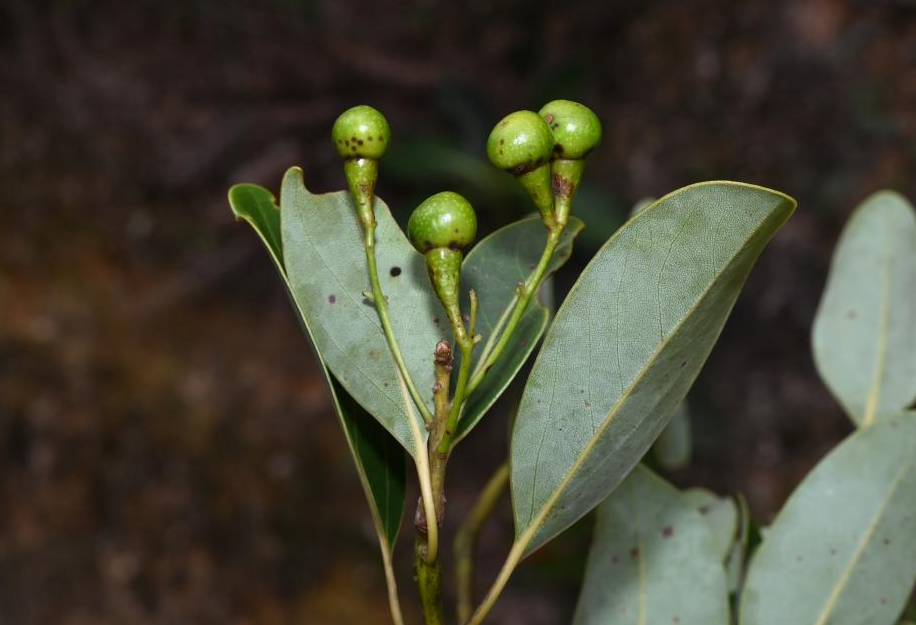
Fruiting branch of Cinnamomum fasciculatum(Image by DENG Shuangwen)
File Download: