Scientists Unlock “Ancestral Code” of Banana Family
Scientists have recently reconstructed the ancestral karyotype of the banana family, revealing how chromosome numbers decreased stepwise from 17 to 9–11 over evolutionary time.
The study was led by scientists from the South China Botanical Garden (SCBG) of the Chinese Academy of Sciences (CAS), in collaboration with researchers from Sichuan University and other institutions. The findings were published in Current Biology.
The banana family (Musaceae) comprises approximately 80 extant species, with substantial diversity in chromosome base numbers (n = 11, 10, and 9) and coloration of the bract—a specialized leaf associated with a flower or inflorescence. Among the family, the most famous member is undoubtedly the cultivated banana (Musa spp.). It provides a food source for more than 400 million people and is one of the most important economic crops in tropical and subtropical regions.
However, modern cultivated varieties rely heavily on vegetative propagation, resulting in a narrow genetic base and low genetic diversity, which makes them particularly vulnerable to devastating diseases. To overcome these challenges, researchers need to turn to wild relatives of cultivated bananas to explore the untapped potential in their chromosome structure, genetic variation, and adaptive traits.
Ancestral Karyotype Reconstruction
In this study, researchers first generated a high-quality, telomere-to-telomere (T2T), gap-free genome assembly of Musa exotica, an early-diverging ornamental banana species, with a contig N50 of 47.41 Mb. By integrating this genome assembly with available Musaceae genomes, the researchers conducted comprehensive comparative genomic analyses and reconstructed the ancestral Musaceae karyotype (AMK), inferring an ancestral haploid chromosome number of n = 17.“A high-quality T2T genome is an important foundation of this study. The genome provides a reliable reference for comparing chromosome structures among Musaceae species and supports subsequent ancestral karyotype reconstruction and comparative analyses,” said HUANG Huirun from SCBG, the co-corresponding author.
According to the researchers, the ancestral karyotype reconstruction further revealed a stepwise reduction in chromosome number during Musaceae evolution.
“The reconstructed ancestral karyotype provides an objective basis for comparing chromosome structures among Musaceae species and inferring their evolutionary trajectories. It also offers a reference for further understanding the genetic information retained by wild relatives and its potential value for utilization,” said FU Ning from SCBG, the co-first author.
The researchers found that the extant n = 11, n = 10, and n = 9 chromosome complements did not arise independently but evolved progressively from the ancestral n = 17 karyotype through multiple chromosome rearrangements, including reciprocal chromosome translocation (RCT), end-to-end joining (EEJ), and nested chromosome fusion (NCF).
This evolutionary trajectory was highly consistent with DNA-based phylogenetic relationships, providing new independent evidence from chromosome structure for understanding the evolutionary relationships among major Musaceae lineages.
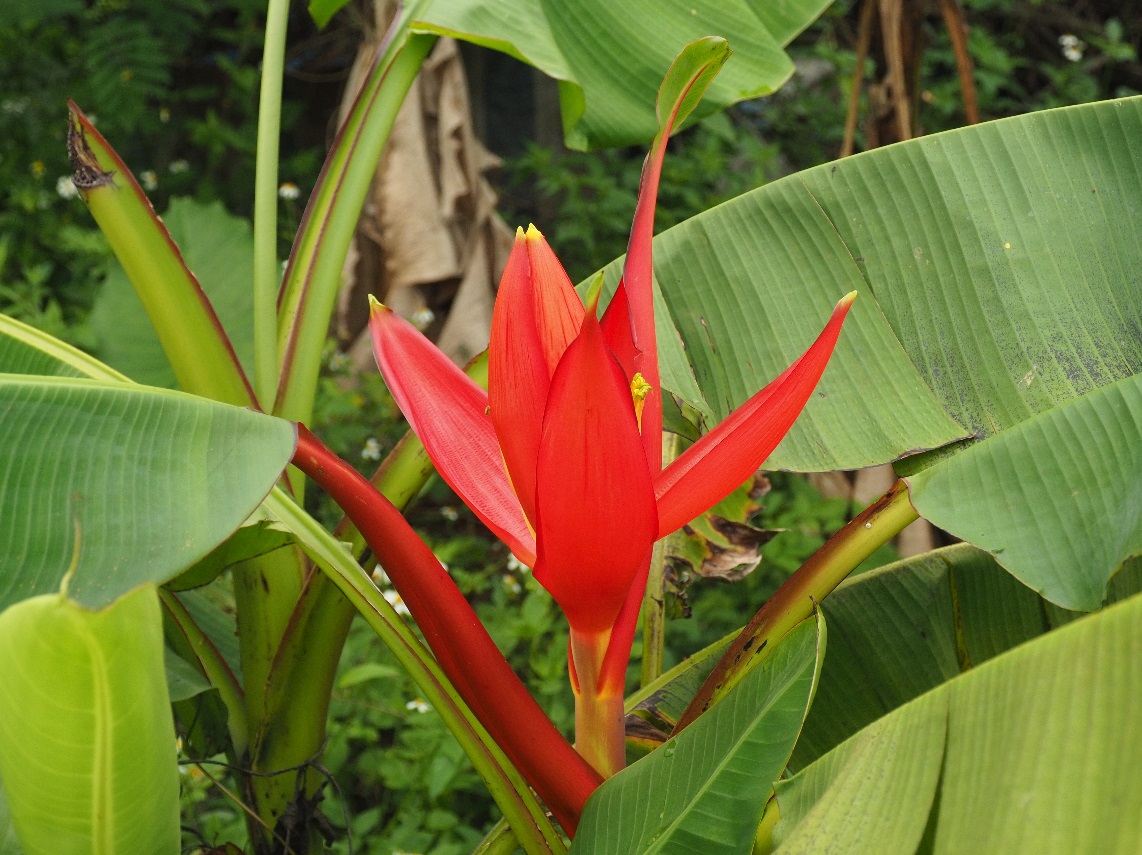
Figure.1. Inflorescence and bright red bracts of Musa exotica in the greenhouse of the South China Botanical Garden, Guangzhou, China(Image by GE Xuejun)
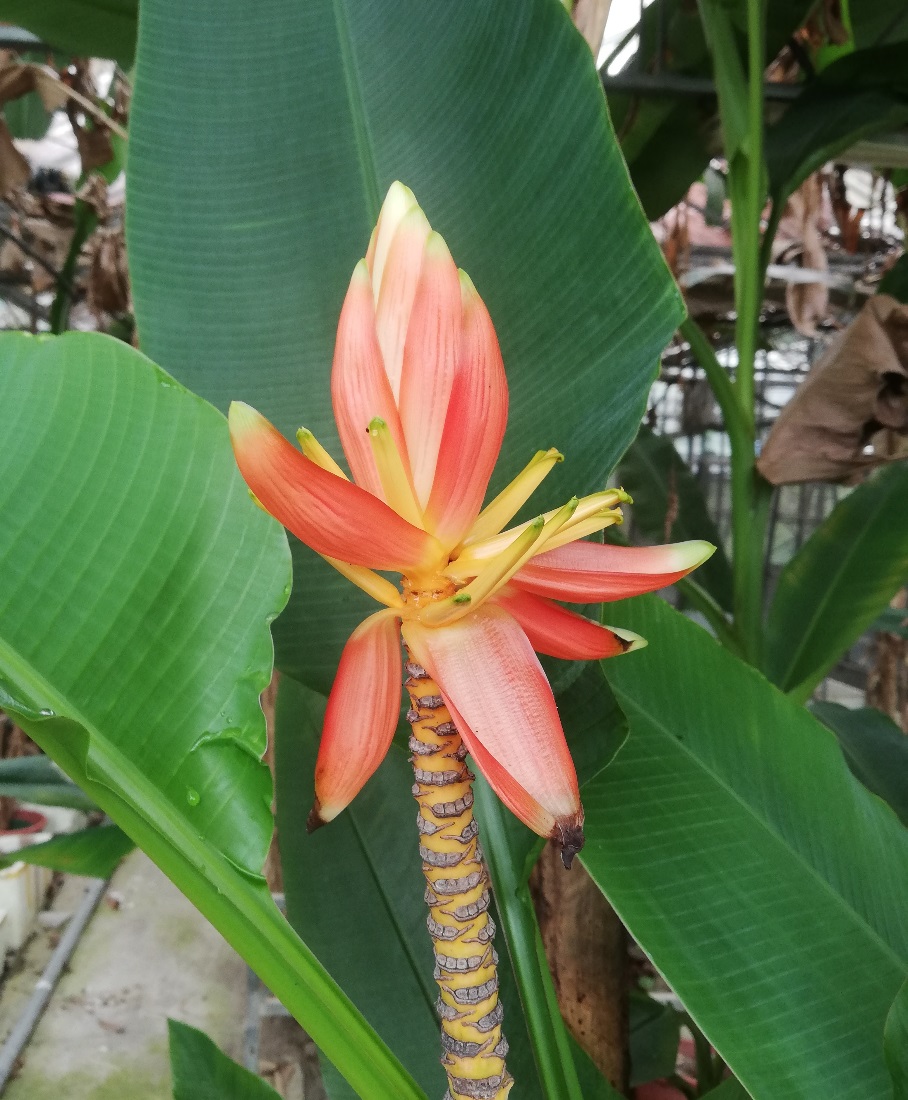
Figure.2. Inflorescence and colorful bracts of Musa exotica in the greenhouse of the South China Botanical Garden, Guangzhou, China(Image by FU Ning)
From Chromosomes to Bract Color
Building on the reconstruction of chromosome evolutionary trajectories, the researchers further investigated the potential relationship between chromosome structural changes and bract color differentiation.
Rearrangement-associated breakpoint regions were found to be significantly enriched in genes involved in anthocyanin biosynthesis and its regulation, including structural genes such as chalcone synthase (CHS) and flavanone 3-hydroxylase (F3H), as well as transcription factors such as MYB and bHLH.
Integrative transcriptomic analyses of bracts with different colors further revealed coordinated expression of key anthocyanin biosynthetic genes, including CHS, CHI, F3′5′H, and ANS. Their expression differences were primarily associated with transcriptional regulation rather than simple changes in gene dosage.
These findings suggest that chromosome structural evolution may contribute to the genetic basis of bract color differentiation by reshaping the genomic environment and regulatory networks.
By linking chromosome structural evolution with bract color differentiation, the study also provides new insights into the genetic regulation of ornamental banana coloration and the utilization of wild Musaceae germplasm, the researchers said.
“This study connects chromosome structural variation with bract color differentiation, providing a new perspective for understanding the genetic basis of bract coloration in ornamental bananas and offering new clues for future genome-informed improvement,” said WANG Xinfeng from SCBG, the co-corresponding author. Article link: https://doi.org/10.1016/j.cub.2026.07.071
File Download: