Topographic decoupling of tree-mortality disturbances: contrasting ecological selection pressures on ridges and in valleys drive divergent soil organic carbon fates
Climate-driven increases in tree mortality threaten the storage and stability of soil organic carbon (SOC) and, ultimately, the persistence of forest carbon sinks. Canopy-opening and detrital-legacy effects are two common ecological consequences of tree mortality. However, these effects often co-occur and vary substantially in intensity and duration across mortality scenarios, making their individual contributions to SOC dynamics difficult to disentangle. As a result, how tree mortality leads to SOC accumulation in some situations but SOC loss in others remains mechanistically unresolved.
Recently, the Sustainable Ecology Group at the South China Botanical Garden, Chinese Academy of Sciences, conducted a study in a 20-ha forest dynamics monitoring plot on Dinghu Mountain in Guangdong Province. The study focused on six canopy tree species within the plot. The researchers selected large tree individuals that had died 2–7 years prior in two topographic settings—ridges and valleys—and conducted paired sampling, using nearby living trees of the same species and diameter class as controls. They demonstrated that topography can regulate the relative dominance of the canopy-opening and detrital-legacy effects of tree mortality, transforming the same tree-mortality event into distinct ecological selection pressures in the two topographic settings, thereby driving SOC toward contrasting fates through divergent microbial strategies for carbon and energy acquisition (Fig. 1).
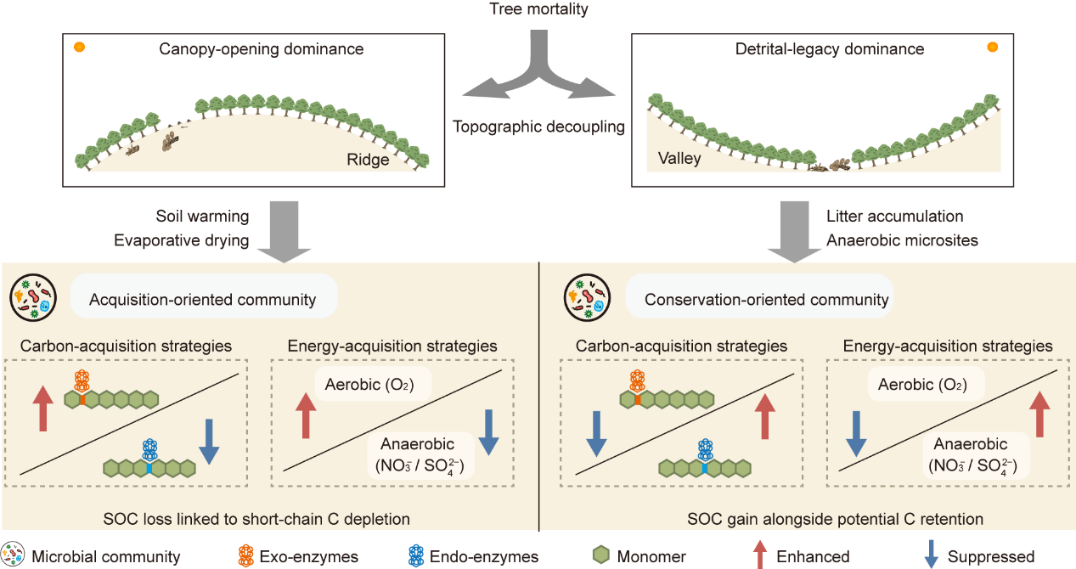
Fig. 1. Conceptual diagram illustrating that topographic‑driven decoupling of two tree‑mortality disturbances promotes divergent fates of soil organic carbon.(Image by LIAN Juyu)
The results showed that, following tree mortality, light-fraction organic carbon (LFOC) increased significantly in valleys, while soil moisture remained unchanged. On ridges, by contrast, soil moisture declined significantly, whereas LFOC showed no significant change (Fig. 2). These contrasting responses were consistent with the hypothesis that the detrital-legacy effect is relatively stronger in valleys, whereas the canopy-opening effect is more pronounced on ridges.
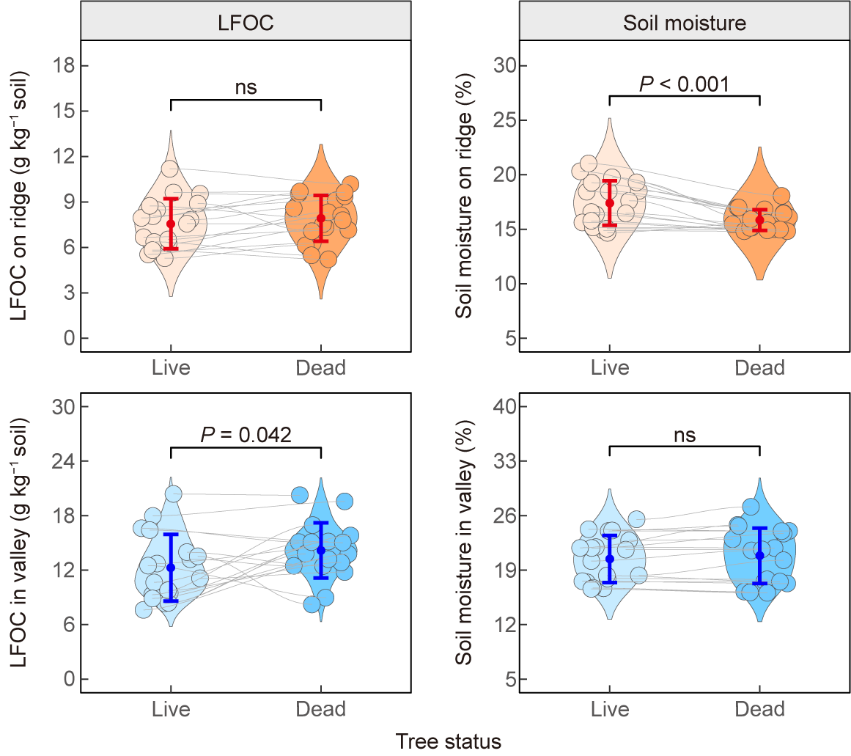
Fig. 2. Topographic‑dependent characteristics of tree-mortality effects on light‑fraction organic carbon and soil moisture.(Image by LIAN Juyu)
SOC responses also differed between the two topographic settings. On ridges, SOC declined significantly following tree mortality, with the decrease more closely linked to losses of heavy-fraction organic carbon (HFOC) than to changes in LFOC. In valleys, by contrast, SOC increased significantly, with the increase more strongly associated with LFOC accumulation than with changes in HFOC (Fig. 3).
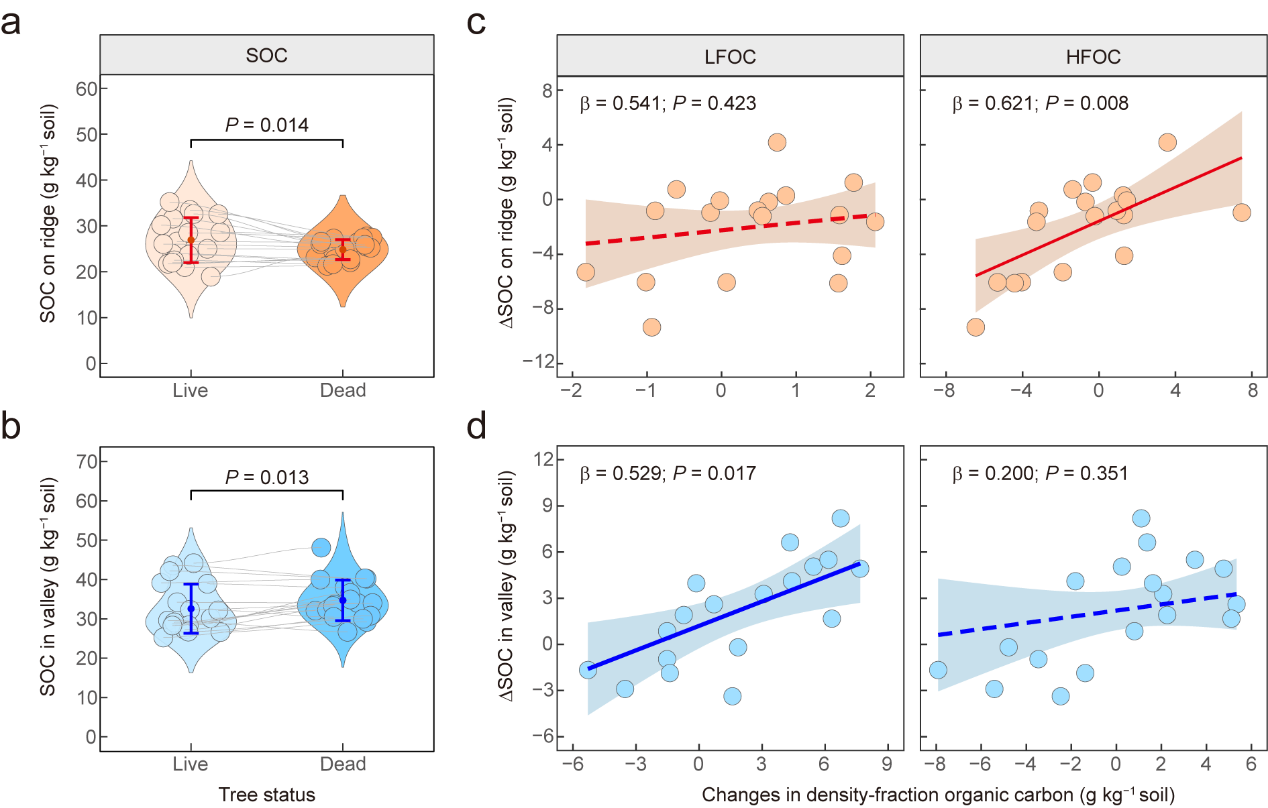
Fig. 3. Topographic‑dependent characteristics of tree-mortality effects on soil organic carbon.(Image by LIAN Juyu)
Microbial communities exhibited a similarly contrasting response to tree mortality. Across bacterial and fungal taxa identified by amplicon sequencing, taxon-specific changes in abundance were negatively correlated between ridges and valleys (Fig. 4). Thus, taxa that increased in abundance following tree mortality on ridges tended to decrease in valleys, and vice versa. This inverse relationship suggests that tree-mortality disturbances imposed contrasting ecological selection pressures on microbial communities across the two topographic settings.
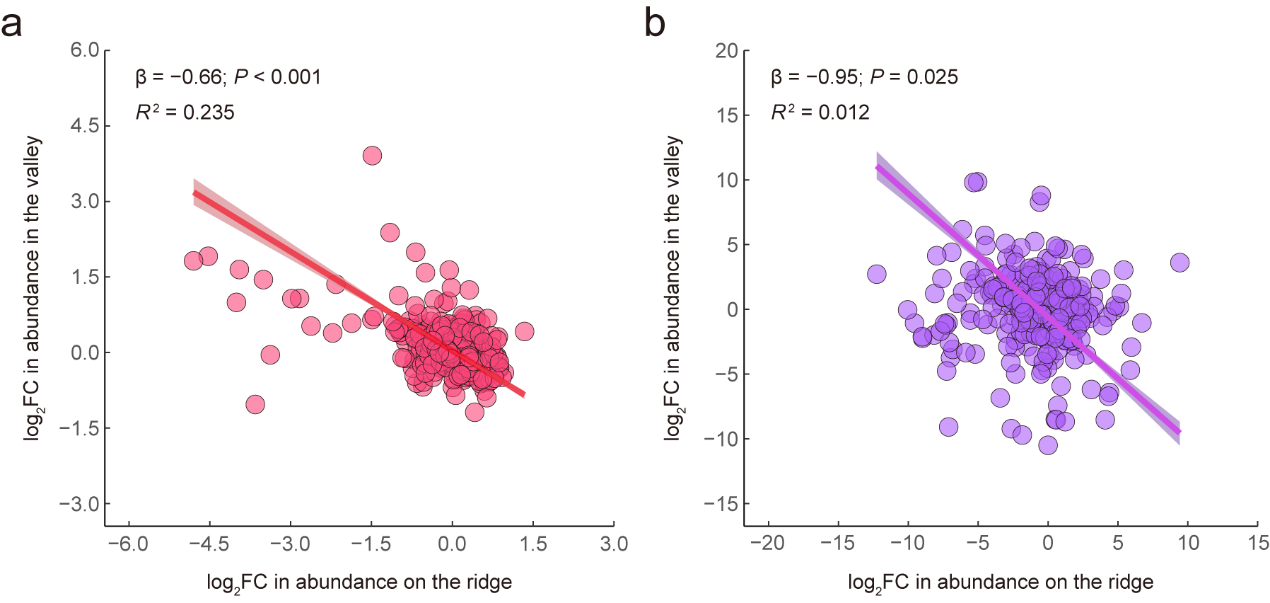
Fig. 4. Relationships between mortality‑induced shift in bacterial (a) and fungal (b) taxon abundances between two topographic settings.(Image by LIAN Juyu)
To investigate the functional basis of these contrasting taxonomic responses, the researchers matched microbial taxa identified by amplicon sequencing to publicly available reference genomes and assigned functional traits based on genes involved in carbon and energy acquisition. After assessing the phylogenetic conservatism and within-taxon stability of these traits, they used interpretable machine-learning models to examine whether differences in functional traits were associated with taxon-specific abundance responses to tree mortality. The resulting patterns of trait selection were then independently evaluated using shotgun metagenomic data. The results revealed contrasting microbial functional strategies across the two topographic settings (Fig. 5). On ridges, tree mortality co-selected microbial community characterized by exo-enzyme traits for carbon acquisition and aerobic-respiration traits for energy acquisition. In valleys, by contrast, it favored microbial community characterized by endo-enzyme traits for carbon acquisition and anaerobic-respiration traits for energy acquisition.
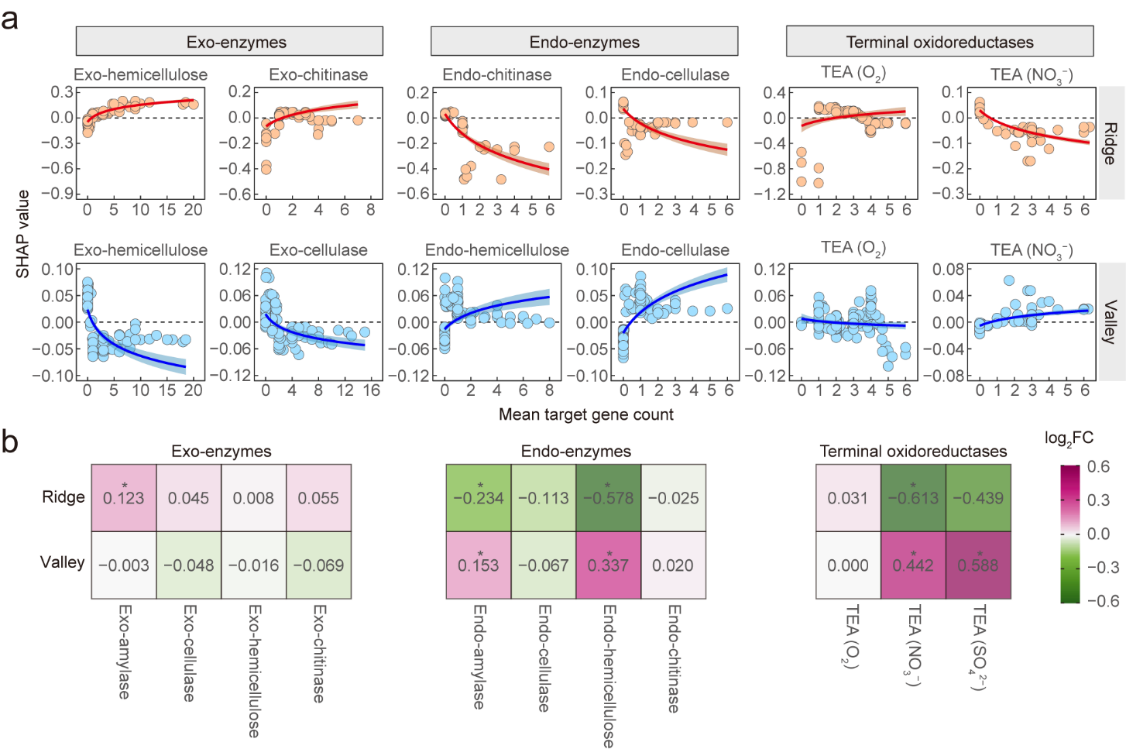
Fig. 5. Distinct soil microbial strategies for carbon and energy acquisition following tree mortality under two topographic settings.(Image by LIAN Juyu)
Research Outlook
Tree mortality can be conceptualized as a composite disturbance consisting of canopy-opening and detrital-legacy effects. The relative magnitude, duration, and spatial distribution of these two effects vary substantially with climate, stand structure, soil conditions, and topography, thereby creating distinct ecological selection environments. These environments select for microbial communities with different strategies for carbon and energy acquisition, ultimately driving diverse SOC trajectories. This framework provides a transferable, process-based perspective for understanding divergent SOC responses across tree-mortality scenarios.
The findings also have implications for forest carbon management aimed at maintaining persistent carbon sinks under increasingly climate-driven tree mortality. Following tree mortality, replanting or assisted natural regeneration that accelerates canopy closure may help reduce soil microclimatic fluctuations and limit aerobic microbial activity, thereby reducing SOC losses. Retaining deadwood may not only maintain inputs of organic polymers, but also promote anaerobic conditions, which may further promote SOC retention.
The study, entitled “Topographic decoupling of tree-mortality disturbances drives contrasting soil carbon fates via divergent microbial strategies,” was published in Nature Communicationson August 29. ZHANG Dongxu, a doctoral student at the South China Botanical Garden, Chinese Academy of Sciences, is the first author, with Professor LIAN Juyu serving as the corresponding author. The work was supported by the National Natural Science Foundation of China–Guangdong Joint Fund, the National Natural Science Foundation of China, and the Chinese Forest Biodiversity Monitoring Network. Article link: https://doi.org/10.1038/s41467-026-77237-1
File Download: