Side Event on National Botanical Garden System and Biodiversity Conservation Successfully Held at the COP17 China Pavilion
The Seventeenth meeting of the Conference of the Parties to the Convention on Biological Diversity (CBD COP17) is being held in Yerevan, Armenia, from 17 to 30 October 2026. On 20 October, the side event “National Botanical Garden System and Biodiversity Conservation” was organized at the COP17 China Pavilion. The event was hosted by South China Botanical Garden, Chinese Academy of Sciences, and co-hosted by the Wildlife Conservation and Monitoring Center of National Forestry and Grassland Administration and the Administrative Center for China's Agenda 21. More than 50 representatives from international organizations, research institutions and the botanical gardens exchanged views on global botanical garden system development, ex situ conservation practice and international cooperation, and jointly released the International Initiative for Collaborative Botanical Garden Network and Biodiversity Conservation. The event was moderated by Yu Yan, Director of the General Office of the South China Botanical Garden.

On-site(Image by Yu Yan)
Advancing Global Plant Conservation Mechanisms
Dr. Carly Cowell, Secretary General of Botanic Gardens Conservation International (BGCI), introduced the Global Strategy for Plant Conservation (GSPC), a core action under the Convention on Biological Diversity. To advance its targets, the Global Partnership for Plant Conservation (GPPC) is developing an online reporting tool—offering both web-based submission and a downloadable Excel template—to streamline reporting and help integrate data into national reports.
Prajna Panda, Chief of Staff and Director Network at the IUCN Species Survival Commission (SSC), presented IUCN's plant conservation framework. The SSC's Plant Conservation Committee comprises 44 species conservation groups, and botanical gardens play a key role in species “insurance” collections, species recovery infrastructure and integrated conservation networks.
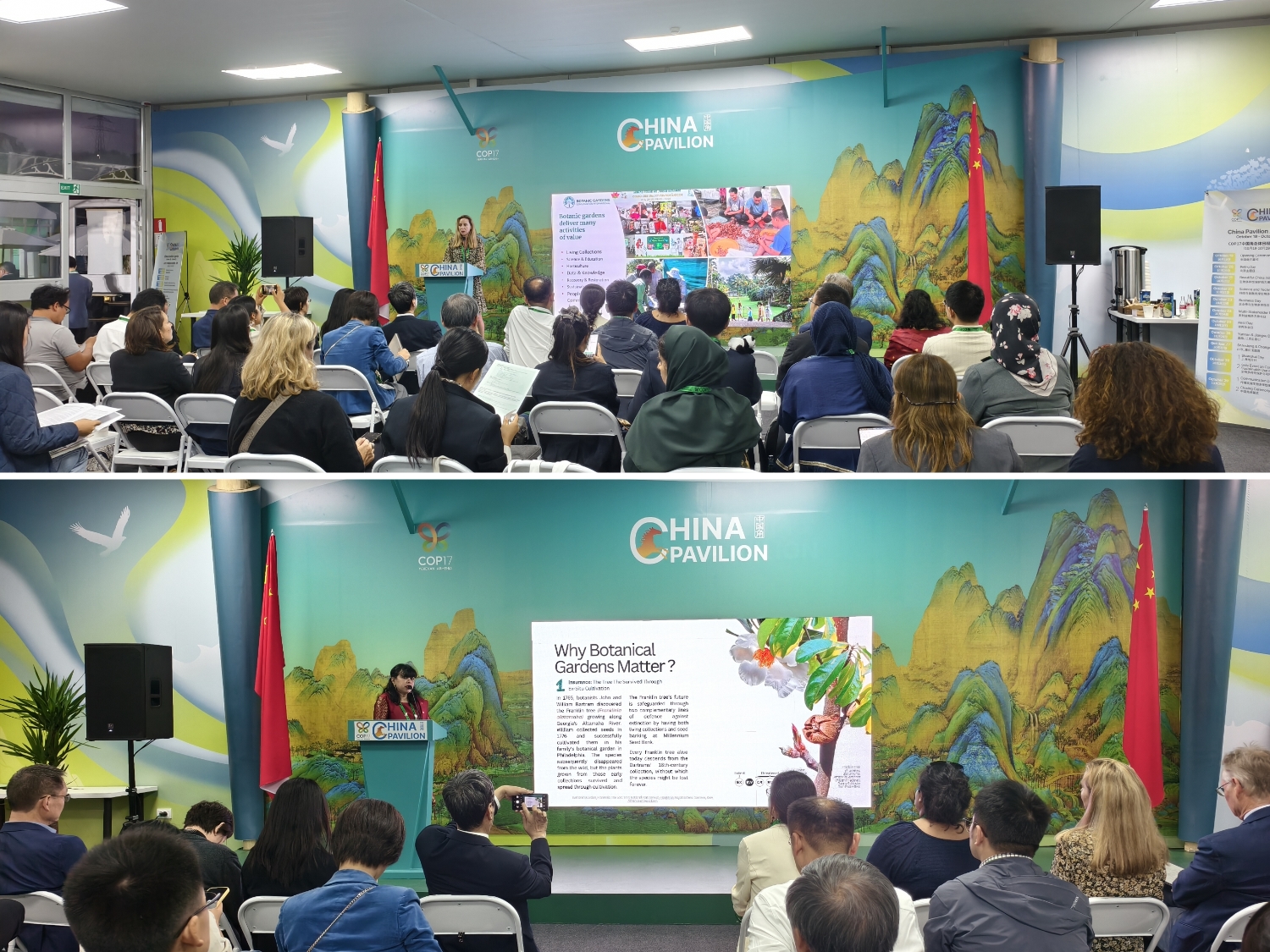
Global plant conservation mechanisms(Image by Yu Yan)
National Botanical Garden System of China in Focus
Ren Hai, President of the Guangzhou Branch of the Chinese Academy of Sciences, presented on “Chinese Botanical Gardens and Plants Conservation”. China has established three national botanical gardens—in Beijing, Guangzhou and Shanghai—alongside 13 candidate gardens, and plans to build about 10 by 2035. The system aims to protect around 70% of threatened plant species in ex situ conservation within national botanical gardens by 2035. It covers four core functions—conservation, research, public education and resource utilization—and will keep strengthening conservation capacity through big data, artificial intelligence and other technologies.
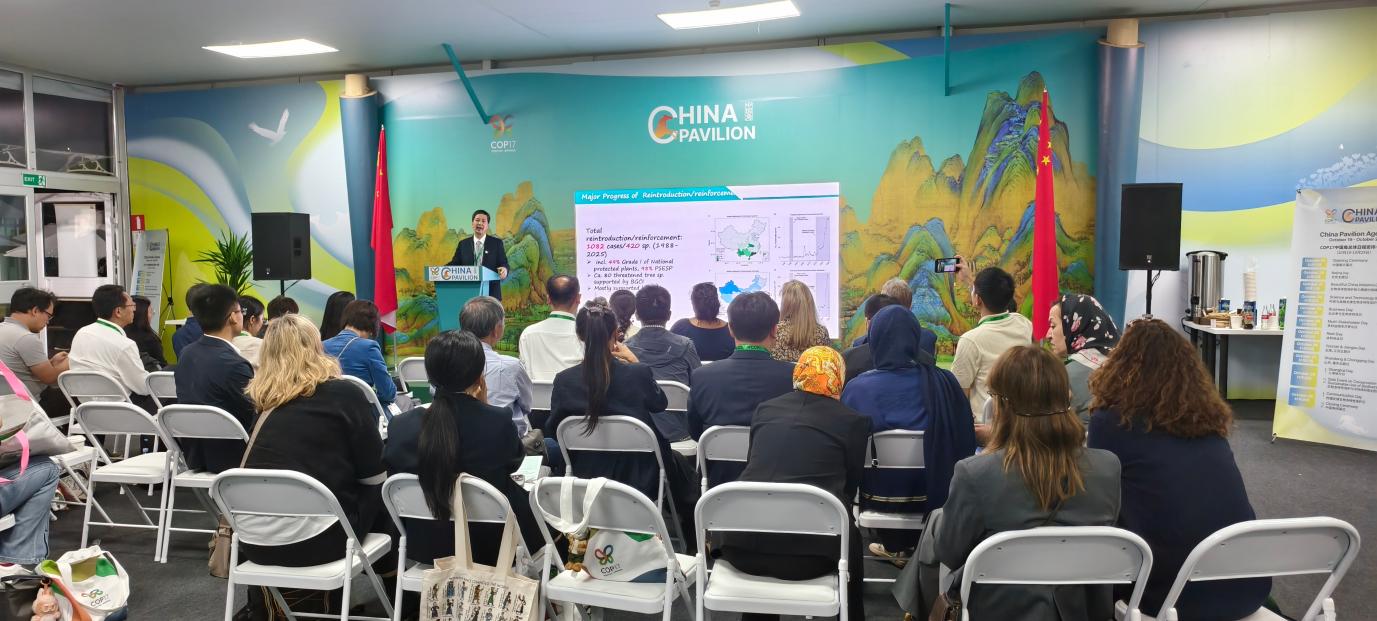
National botanical garden system of China(Image by Yu Yan)
Diversely Advancing Biodiversity Conservation
Tao Xiaohui, Director of the Guangzhou Baiyun Mountain Scenic Area Administration Bureau, shared experience of the Yunluo and Yunxi Botanical Garden in Guangzhou. Based on the South China National Botanical Garden, Guangzhou has pioneered the concept of “city–garden integration” and built a “1+3+N” membership framework that extends botanical garden functions from the garden into parks, communities and schools, making conservation outcomes accessible to all.
Dr Mark Watson, Head of Taxonomy and Macroecology at the Royal Botanic Garden Edinburgh, described the garden's century-long collaboration with China. Home to one of the world's largest collections of living Chinese plants, RBGE has worked extensively with Chinese partners on plant taxonomy, genomics, threatened species conservation and projects such as the World Flora Online.
Zhang Peng, Deputy General Manager of Chimelong Group, introduced Chimelong's “smart conservation” model, which integrates scientific research, species conservation, public education and cultural experience. Using technology for breeding, rescue and ecological restoration—and embedding conservation into cultural tourism—it has formed a distinctive “five forces” model.
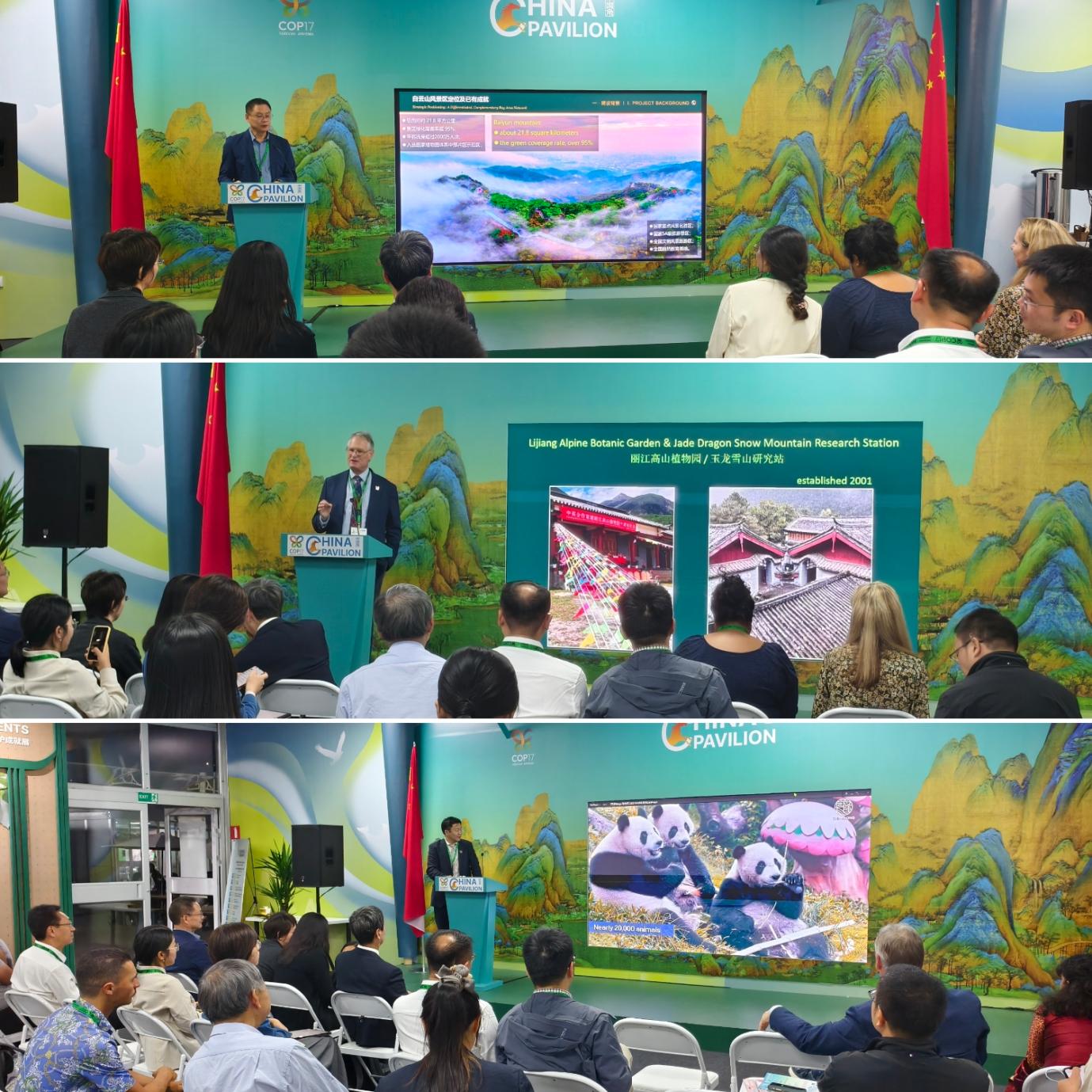
Biodiversity conservation in practice(Image by Yu Yan)
Voices on Conservation Action
Huang Wei, Deputy Director of the Wuhan Botanical Garden, Chinese Academy of Sciences, presented the garden's work on in situ and ex situ conservation of threatened plants in Central China, citing kiwifruit as a successful example of combining conservation with sustainable use.
Ruan Lin, Deputy Director of the Guangzhou Municipal Forestry and Landscape Bureau, shared Guangzhou's “city–garden integration” concept, emphasizing that integrating garden, research, public education and culture can deliver both ecological protection and urban development.
Li Naiwei, Director of the Ex Situ Conservation Center, Nanjing Botanical Garden Mem. Sun Yat-sen, described the garden's shift from a focus on plant utilization to resource conservation, with an integrated approach spanning field survey, discovery of threatened plants, ex situ conservation, and data feedback and comparative utilization.
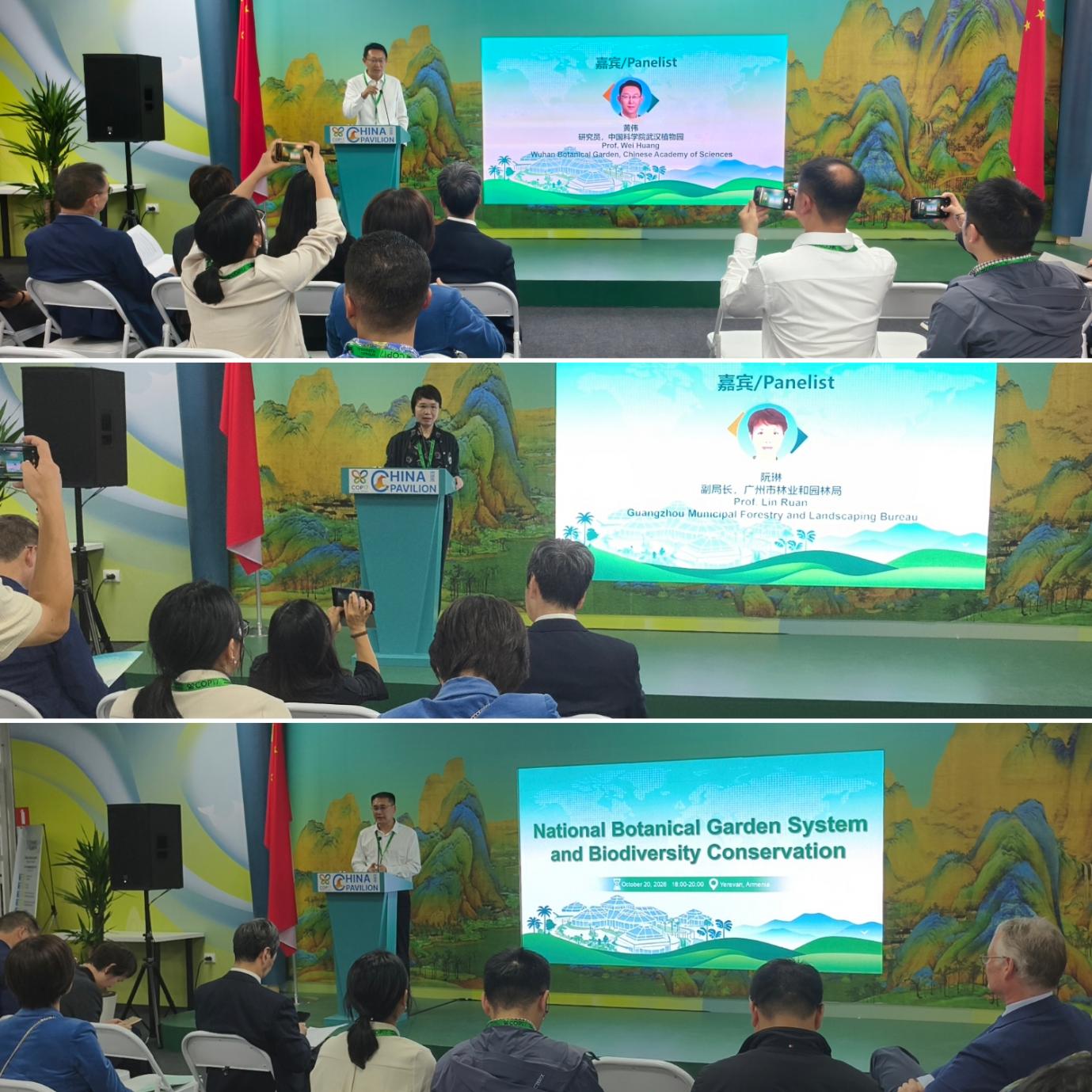
Guest speakers(Image by Yu Yan)
Releasing the International Initiative
Members of the Botanical Garden Working Group of the Chinese Academy of Sciences took an active part and, together with other participants, released the International Initiative for Collaborative Botanical Garden Network and Biodiversity Conservation. The initiative calls on botanical gardens, research institutions, industry practitioners and all relevant stakeholders worldwide to take coordinated, sustained action: first, to co-build a connected global botanical garden network and establish unified mechanisms for the collection, conservation, sharing and sustainable use of plant genetic resources; second, to deepen open and inclusive international scientific collaboration in plant germplasm innovation, ecological restoration, seed bank conservation and digital biodiversity monitoring; third, to scale up targeted capacity building and knowledge dissemination, prioritizing technical training, personnel exchange and assistance for developing countries and regions with weak conservation capacity; and fourth, to fully integrate botanical garden action into implementation of the Kunming-Montreal Global Biodiversity Framework, particularly Target 4 on species conservation and Target 10 on sustainable ecosystem management. The initiative expresses the shared hope of uniting botanical garden conservation efforts worldwide to weave a solid living safety net for global plant diversity and to contribute to the 2030 global biodiversity vision.
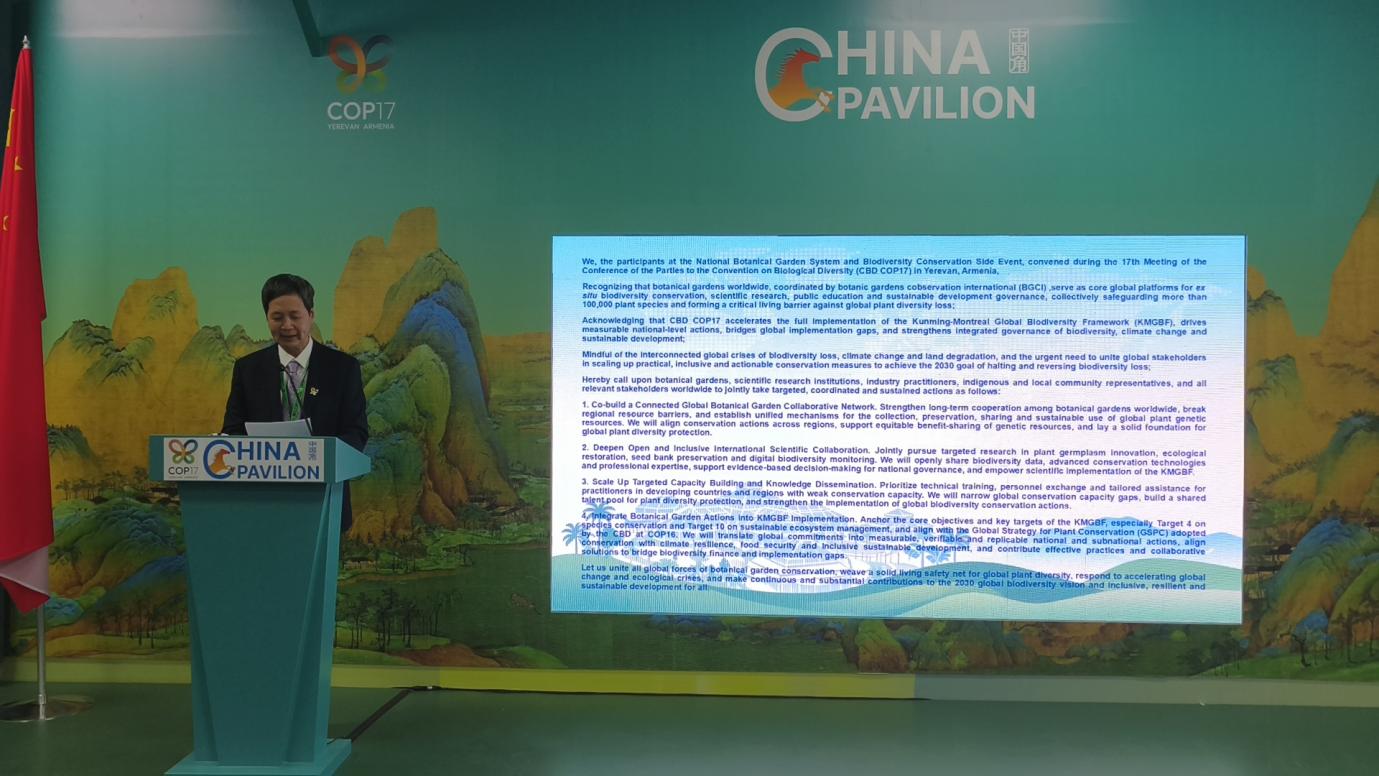
Ren Hai reading the initiative(Image by Yu Yan)
Chinese Botanical Gardens on the World Stage
At the COP15 meeting in Kunming in 2021, President Xi Jinping announced at the Leaders' Summit the launch of national botanical garden systems in Beijing, Guangzhou and other cities, following the principle of combining in situ and ex situ conservation. Over the past five years, national botanical garden system of China has made significant progress. This side event showcased China's achievements in ex situ conservation of plant diversity and in building its national botanical garden system, deepened exchanges and cooperation with the international botanical garden community, and contributed Chinese wisdom and solutions to global biodiversity governance.
File Download: