News
-
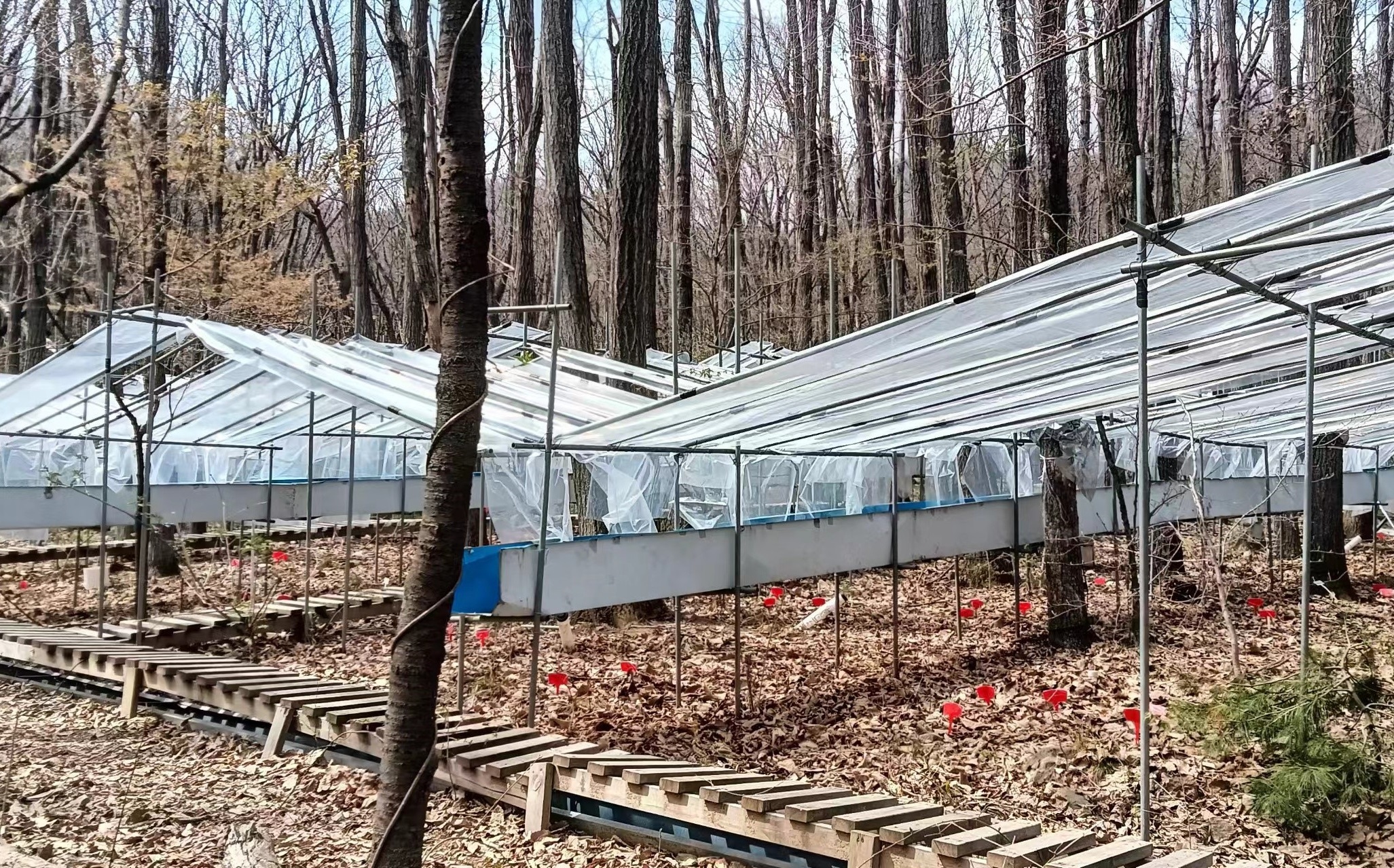 2026-08-21Study: Forest Trees Do Little to Acclimate to Prolonged DroughtA global analysis of 40 throughfall reduction experiments found no evidence of physiological acclimation to prolonged drought in forest trees. Despite largely stable hydraulic and photosynthetic capacities, drought narrowed hydraulic safety margins, raising concerns about the fate of forests. Figure. A rainfall reduction plot used to simulate drought in a temperate forest in Baotianman, Henan, China.(CHEN Zhicheng)Forests support much of the world’s biodiversity and play a vital role in regulating Earth’s climate, but they are increasingly exposed to drought. To understand the potential consequences of drought, a key question is ...Read More
 -
 2026-08-21Scientists Unlock “Ancestral Code” of Banana FamilyThe research team generated a telomere-to-telomere (T2T), gap-free genome assembly of the ornamental banana Musa exotica and, by integrating comparative genomic analyses, reconstructed the ancestral Musaceae karyotype (AMK, n = 17), revealing the stepwise evolution of extant n = 11, 10, and 9 chromosome complements through rearrangements. Furthe... Scientists have recently reconstructed the ancestral karyotype of the banana family, revealing how chromosome numbers decreased stepwise from 17 to 9–11 over evolutionary time.The study was led by scientists from the South China Botanical Garden (SCBG) of the Chinese Academy of Sciences (CAS), in collaboration with researchers from Sichuan Univ...Read More
 -
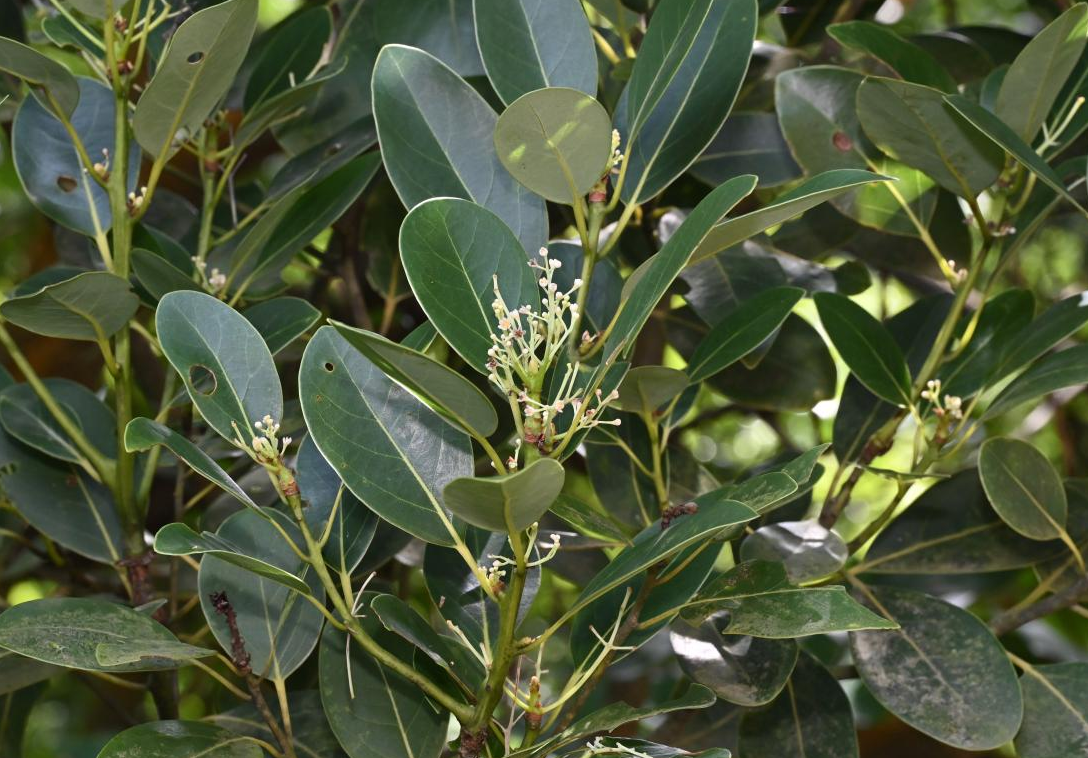 2026-08-20Cinnamomum fasciculatum (Lauraceae), a new species from Guangdong, ChinaA new species, Cinnamomum fasciculatum S.W.Deng & R.J.Wang, was discovered in Jiangmen, Guangdong Province, China and described based on morphological and molecular evidence. The most distinctive feature of C. fasciculatum is its inflorescence structure: several thyrsoid corymbiformly arranged in the axils of cataphylls below the terminal vegeta... The genus Cinnamomum Schaeff. (Lauraceae) comprises approximately 250 species widely distributed from tropical and subtropical Asia to the western Pacific. Traditionally, Cinnamomum s.l. is divided into sect. Camphora Meisn. (ca. 20 species) and sect. Cinnamomum (ca. 230 species). Sect. Camphora is distinguished by its alternate, pinnately veine...Read More
 -
 2026-08-10Population History, Not Age, Determines the Genomic Importance of Ancient TreesA genomic study of 147 ancient, wild and cultivated Chinese swamp cypress (Glyptostrobus pensilis) trees shows that the evolutionary importance of ancient trees depends more on population history than on age alone. Ancient trees—those that are remarkably old for their species—are declining worldwide, raising concerns about the loss of the ecological and evolutionary history they represent. Their exceptional longevity has long encouraged the idea that they act as genetic reservoirs, preserving variation that may have been lost from younger populations. Bu...Read More
 -

-
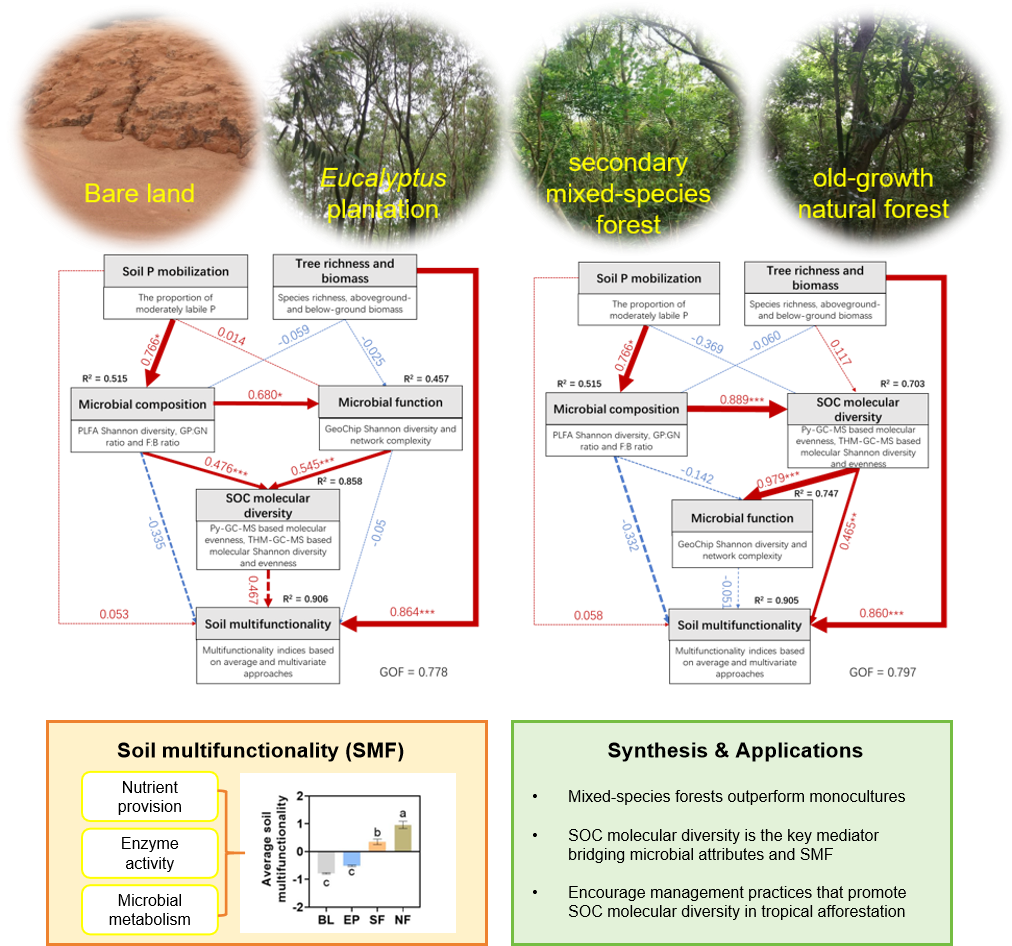 2026-07-22A novel mechanism by which mixed-species afforestation enhances the multifunctionality of degraded tropical soilsAfforestation greatly improves soil multifunctionality likely by more diverse and functionally active soil microbial communities. The diversity of SOC molecules plays a key role in linking microbial attributes with soil multifunctionality under tropical afforestation. Afforestation is a key strategy for restoring degraded ecosystems and mitigating climate change. However, previous assessments have focused on vegetation recovery or individual soil functions, leaving a gap in understanding how different afforestation models jointly influence nutrient supply, enzyme activity, and microbial metabolism—collective...Read More
 -

-
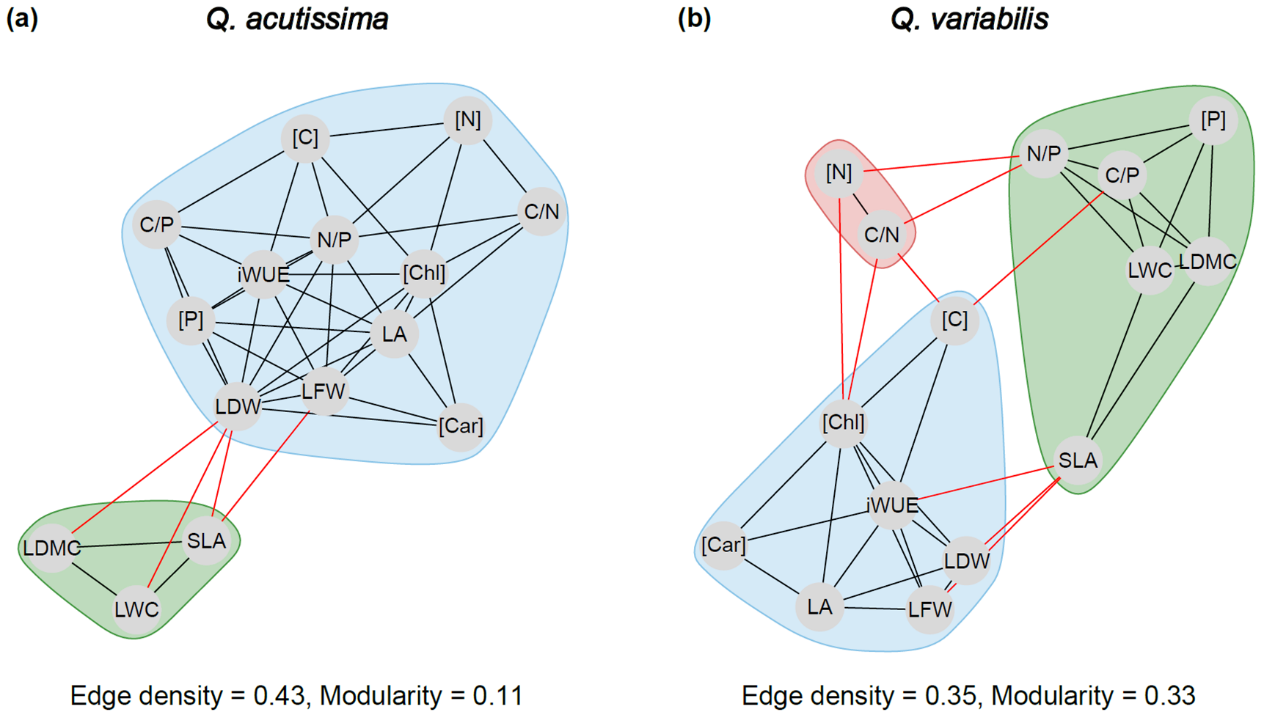 2026-07-15New findings on adaptive strategies of sympatric oaks along climate gradients in ChinaThis study unravels divergent and convergent responses of two sympatric oaks via traits integration and adaptive strategies to climate change. Their distinct trait plasticity and phenotypic integration under unfavorable climate might lead to niche differentiation and complex community assembly. Exploring the coexistence mechanisms of sympatric closely related species along climate gradients is crucial to predicting shifts in species distribution and community assembly. Previous studies mainly focus on the differentiation of specific functional traits, but scarcely explore the trait variability and their coordination with plant trait ne...Read More