News
-
 2026-10-10Air-Layering Propagation of the Nationally Protected Plant Ormosia purpureiflora SucceedsAn important success has been achieved in the propagation of the nationally protected plant Ormosia purpureiflora using air-layering technology. This species is endemic to China, and only approximately 2,000 individuals have been found in Guangdong Province, where it has suffered from low seed set rates, as well as low seed germination and growt... Researchers from the Management Office of Guangdong Luofushan Provincial Nature Reserve, South China Botanical Garden (SCBG), the Chinese Academy of Sciences and Guangzhou Linfang Ecological Technology Co., Ltd., have achieved an important success in propagating the nationally protected plant Ormosia purpureiflora by air-layering technology.The ...Read More
 -
 2026-09-16Study Finds Earlier and Faster Heatwave Onset on Land Under a Warming ClimateHeatwaves are expected to become more frequent and intense with global warming. Here the authors assess changes in their timing, finding that the heatwave season expands and that many regions see a faster onset of heatwaves. These findings highlight the need to incorporate heatwave timing into early-warning systems, risk assessments and proactiv... Heatwaves over land worldwide are beginning earlier, ending later and occurring over longer seasons, while the first heatwave of the season has recently shifted toward faster onset, according to a new study led by researchers from the South China Botanical Garden (SCBG) of the Chinese Academy of Sciences (CAS). The findings, published in Nature ...Read More
 -
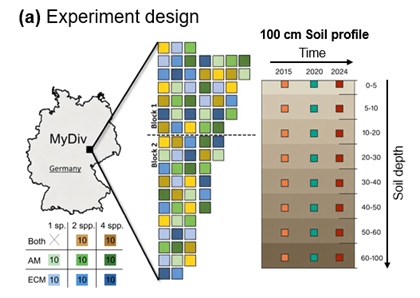 2026-09-16Reveals Early Effects of Tree Species Diversity on Soil Fungal NecromassIn the MyDiv experiment, we tracked how tree species richness and mycorrhizal types shape soil C, N, and microbial necromass dynamics across a 1 m profile over a decade. Despite an overall decadal decline in bulk soil C and N, biodiversity effects selectively boosted topsoil fungal necromass—initially in mixed AM + ECM communities and later in ... Afforestation is an important strategy for restoring degraded ecosystems and strengthening terrestrial carbon sinks. However, in temperate regions, how soil carbon and nitrogen pools change during the early stages of afforestation, and when tree species diversity and mycorrhizal types begin to influence belowground carbon processes, remain poorl...Read More
 -
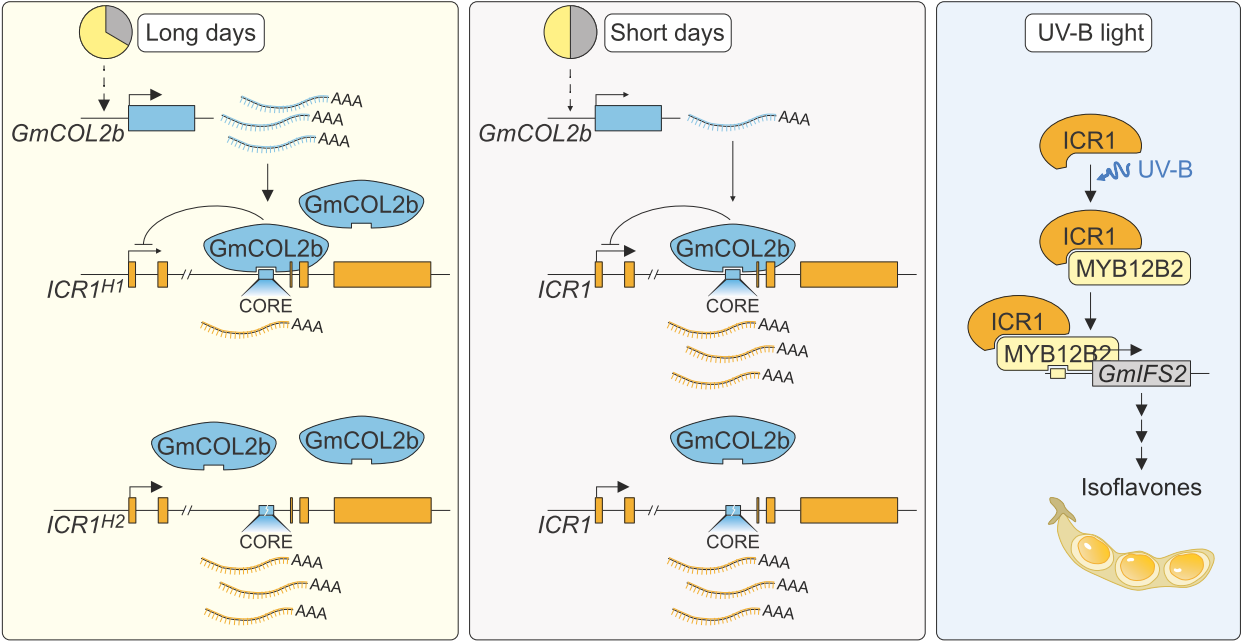 2026-09-16Light Environment Regulates Isoflavonoid Biosynthesis in Soybean SeedsIsoflavonoids aid plant defense, microbial interactions, stress responses, and nodulation, and benefit human nutrition and health. Here, the authors report that photoperiod and UV-B coordinate ICR1 to control seed isoflavonoid accumulation in soybean, offering genetic resources for quality improvement and revealing how seasonal light changes boo... Isoflavonoids are an important class of secondary metabolites in soybean. They not only participate in physiological processes such as plant disease resistance, microbial interactions, abiotic stress responses, and nodule formation, but also have significant nutritional and health value for humans. Although the molecular mechanisms underlying is...Read More
 -
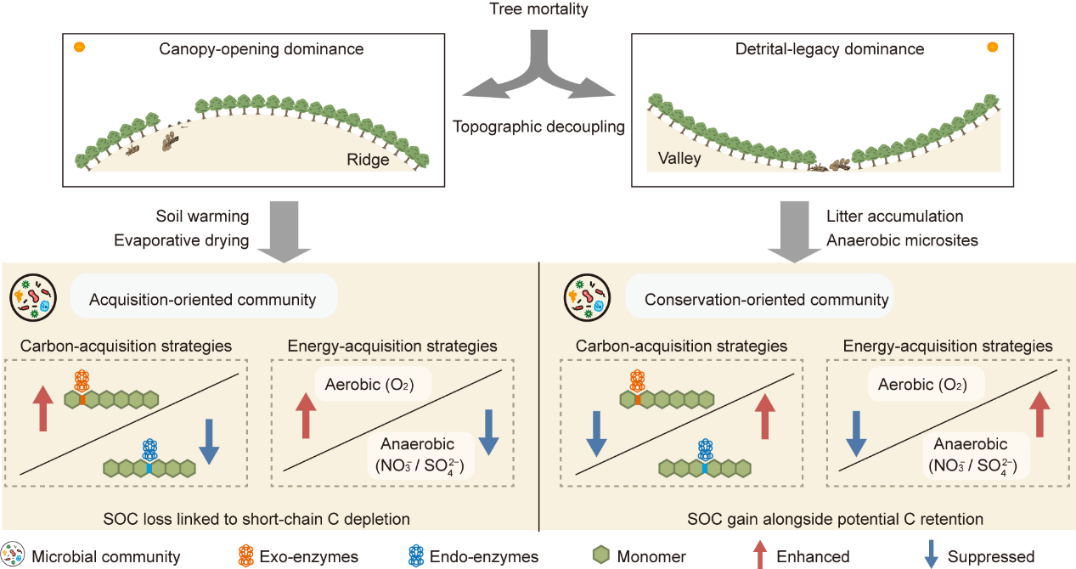 2026-09-06Topographic decoupling of tree-mortality disturbances: contrasting ecological selection pressures on ridges and in valleys drive divergent soil organic carbon fatesTopography spatially decouples the canopy-opening and detrital-legacy effects of tree mortality, creating distinct pressures on soil microbes that drive soil carbon toward contrasting fates through divergent microbial strategies. Climate-driven increases in tree mortality threaten the storage and stability of soil organic carbon (SOC) and, ultimately, the persistence of forest carbon sinks. Canopy-opening and detrital-legacy effects are two common ecological consequences of tree mortality. However, these effects often co-occur and vary substantially in intensity and dura...Read More
 -
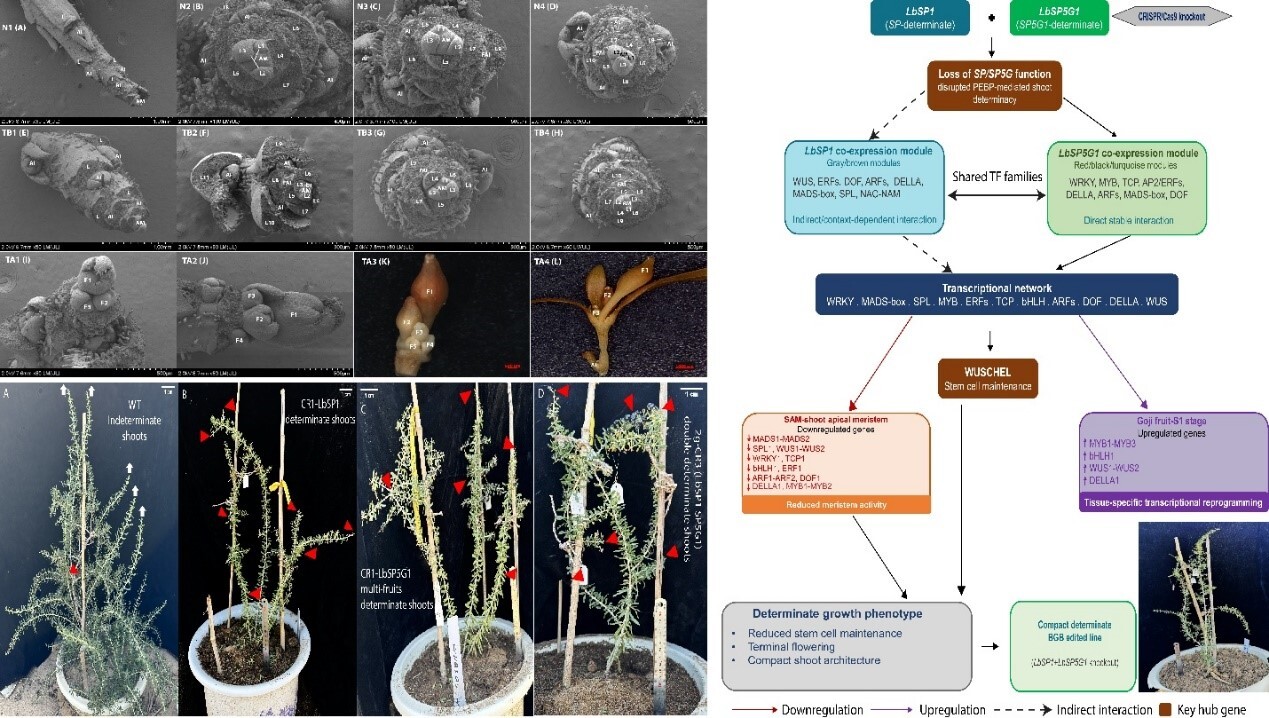 2026-09-06Makes Significant Progress in Reshaping the Growth Habits of Goji BerryResearchers from the South China Botanical Garden have successfully reprogrammed the sprawling, indeterminate growth habit of goji berry into a compact, determinate architecture using CRISPR/Cas9 gene-editing technology. By knocking out two key genes, LbSP1 and LbSP5G1, the team achieved synchronized flowering and fruiting, with the double-mutan... Goji berry (Lycium barbarum L.) is a perennial woody cash crop of high nutritional and medicinal value, boasting prominent industrial significance. However, its typical indeterminate inflorescence habit has become a major bottleneck constraining the industry's development. This trait causes goji branches to continuously sprout, bloom, and bear f...Read More
 -
-
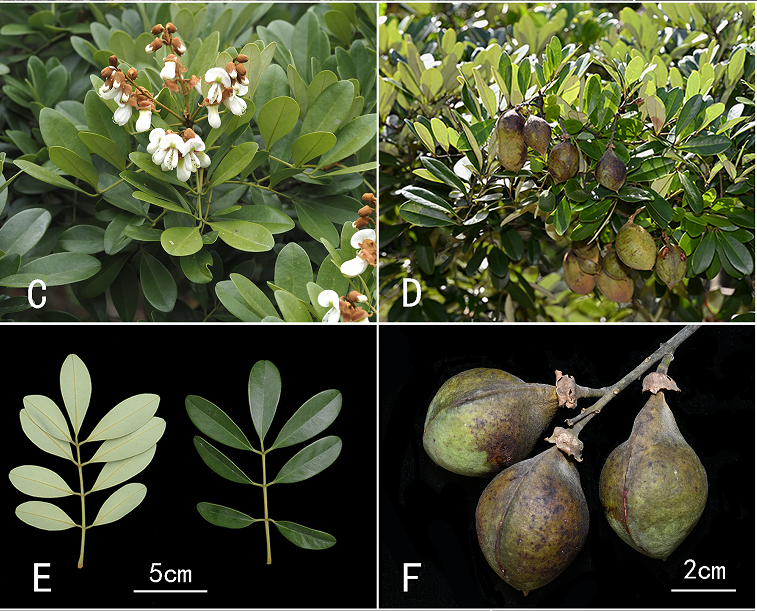 2026-09-02Two new national second-class protected wild plants discovered in Guangdong: Ormosia yangjiangensis and Ormosia taishanensisTwo new Ormosiaspecies — O. yangjiangensis(Endangered, <500 mature individuals) and O. taishanensis(Critically Endangered, <100 mature individuals) — were discovered in the Greater Bay Area and automatically became national second-class protected plants upon publication. Misidentified for decades due to reliance on leaves and dry pods, the stu... "Red berries grow in southern land, how many spring branches hold?" The red beans described by WANG Wei in his poem have carried the longing of Chinese people for thousands of years. Today, right in the "southern land" mentioned in the poem—the Guangdong-Hong Kong-Macao Greater Bay Area—a research team has unveiled the mystery of two new speci...Read More